House Advances Bipartisan Kids’ Online Safety Bill, But Senate Challenges Remain

A bipartisan agreement in the U.S. House of Representatives has renewed momentum for federal legislation aimed at improving online safety for children and teens. Lawmakers on the House Energy and Commerce Committee recently reached a compromise on a bill that would require social media platforms to provide stronger safety tools, increase parental controls, and offer greater protections for young users.
While the agreement represents an important step forward, the legislation still faces significant hurdles in the Senate. Several key issues including how much responsibility technology companies should bear for preventing harm, the role of state laws, and concerns about privacy and free speech remain points of debate among lawmakers and advocacy organizations.
For parents, caregivers, and professionals, the continued focus on children’s digital safety reflects growing recognition that online platforms play a major role in young people’s lives. Regardless of when federal legislation is enacted, families should continue having open conversations about online safety, privacy, healthy technology use, and recognizing online risks such as grooming, exploitation, and cyberbullying.
Read the original story from The Hill: House breakthrough on kids’ online safety faces long odds in Senate
Free Back-to-School Health Fairs Help Families Prepare for the New School Year
As families begin preparing for the upcoming school year, Community Health Care is helping make the process easier through its free Back-to-School Health Fairs.
For many parents and caregivers, the start of a new school year comes with an important checklist: scheduling sports physicals, dental checkups, and ensuring children are up to date on required vaccinations. These appointments can be challenging to coordinate, especially during the busy summer months. Community Health Care’s Health Fairs aim to bring these essential services together in one convenient location at no cost to families.
The free health fairs will provide access to:
- Sports physicals
- Dental checkups
- Vaccinations
These services can help students meet school and athletic participation requirements while supporting their overall health and well-being before classes begin.
Events like these play an important role in reducing barriers to healthcare and ensuring that children enter the school year healthy, prepared, and ready to learn. Families are encouraged to register early and review available dates and locations.
To find upcoming health fair dates, locations, and registration information, visit:
https://www.commhealth.org/healthfairs
By taking advantage of these free services, families can cross several important items off their back-to-school checklist while helping their children start the school year on the right foot.

United Kingdom Announces Social Media Ban for Children Under 16
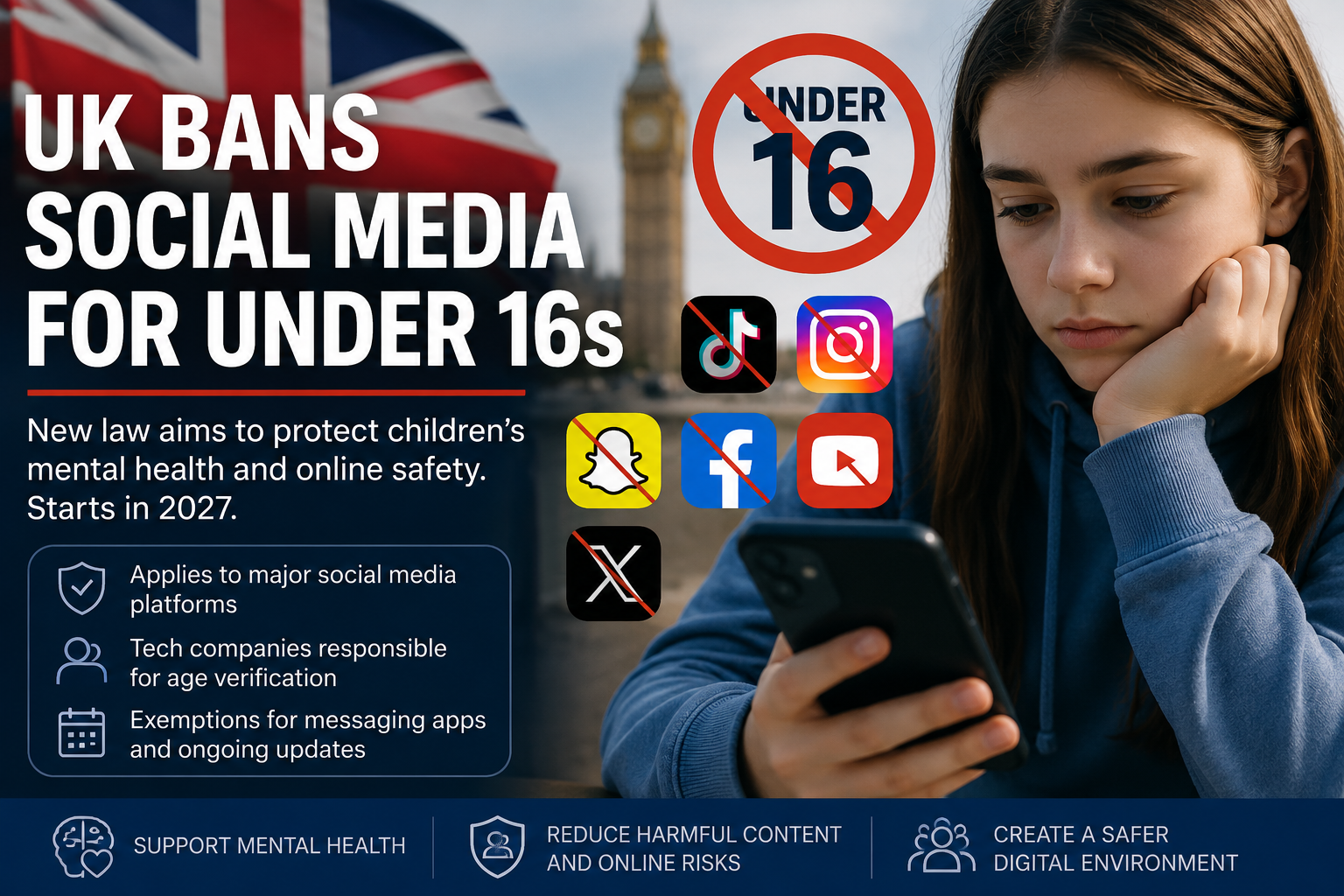
The United Kingdom has announced plans to prohibit children under the age of 16 from accessing major social media platforms beginning in 2027. The policy is intended to address concerns about cyberbullying, online exploitation, harmful content, excessive screen time, and the impact of social media on youth mental health. Popular platforms such as TikTok, Instagram, Snapchat, Facebook, YouTube, and X are expected to be included, with technology companies responsible for enforcing age restrictions through enhanced age-verification measures.
The announcement has sparked debate among parents, educators, child development experts, and technology companies. Supporters argue that stronger protections are needed to shield children from online harms and addictive algorithms, while critics question whether age-based bans will be effective and raise concerns about privacy and the collection of personal information required for age verification.
For caregivers and child welfare professionals, the decision highlights the challenge of balancing online safety with the benefits of digital connection. While social media can expose youth to risks, it also provides access to educational resources, peer support, and community connections—particularly for youth in foster care, LGBTQIA+ youth, and those living in isolated communities. As countries continue exploring ways to protect children online, the UK’s decision may influence future legislation around the world, including in the United States.
Read the original announcement:
https://www.gov.uk/government/news/social-media-to-be-banned-for-under-16s-in-landmark-government-move-to-givekids-their-childhood-back
Major Foster Care Agency Reverses LGBTQ+ Foster and Adoption Policy
The policy change may have a significant impact on LGBTQIA+ youth in foster care, who are already disproportionately represented in the child welfare system due to factors such as family rejection, abuse, neglect, and homelessness. Research shows that LGBTQIA+ youth enter foster care at higher rates than their peers and often face additional challenges, including placement instability and poorer mental health outcomes.
Advocates emphasize that representation matters. While many families can provide safe and supportive homes, LGBTQIA+ youth benefit from caregivers who affirm their identities and understand their lived experiences. As child welfare agencies work to meet the diverse needs of children in care, many believe youth deserve access to caregivers who can provide both affirmation and representation.
With foster care systems nationwide already facing caregiver shortages, some child welfare professionals worry that limiting the number of qualified foster and adoptive families may further reduce placement options for children and youth waiting for safe, stable, and permanent homes.
Read the original article:
https://www.christianitytoday.com/2026/06/bethany-christian-no-longer-allows-lgbtq-parents-foster-adopt/

Remembering Pulse: 10 Years Later

This month marks the 10th anniversary of the tragic shooting at Pulse Nightclub in Orlando, Florida, one of the deadliest acts of violence against the LGBTQ+ community in United States history.
In the early morning hours of June 12, 2016, a gunman opened fire inside Pulse during the club’s popular Latin Night event. Forty-nine people were killed and 58 others were injured. Many of those lost were members of both the LGBTQ+ and Latino communities, making the tragedy particularly devastating for communities already facing discrimination and marginalization. The attack was later classified by federal investigators as an act of terrorism.
Ten years later, survivors, family members, first responders, and communities across the country continue to honor the lives lost while reflecting on the lasting impact of that night. Memorial events were held throughout Florida and across the nation on June 12, 2026, including vigils, remembrance ceremonies, and community gatherings focused on healing, resilience, and hope.
For many survivors and families, the anniversary serves as a reminder that healing is not a linear process. While grief remains, many have transformed their pain into advocacy, community service, and efforts to create safer and more inclusive spaces for future generations. Survivors have become leaders in LGBTQ+ advocacy, violence prevention initiatives, and support programs for those impacted by trauma.
This year’s anniversary is particularly significant as it is the first since the original Pulse nightclub building was demolished earlier in 2026. The site is being redeveloped into a permanent memorial that will honor the victims and provide a place for reflection and remembrance. The memorial is expected to open in 2027.
As we remember the 49 lives taken too soon, we also recognize the resilience of survivors, families, and communities who continue to stand against hatred, violence, and discrimination. Their stories remind us of the importance of creating environments where every person feels safe, valued, and accepted for who they are.
The legacy of Pulse lives on through acts of remembrance, advocacy, and the ongoing commitment to building a more inclusive and compassionate world.
Colorado Implements New Foster Youth Bill of Rights Protections
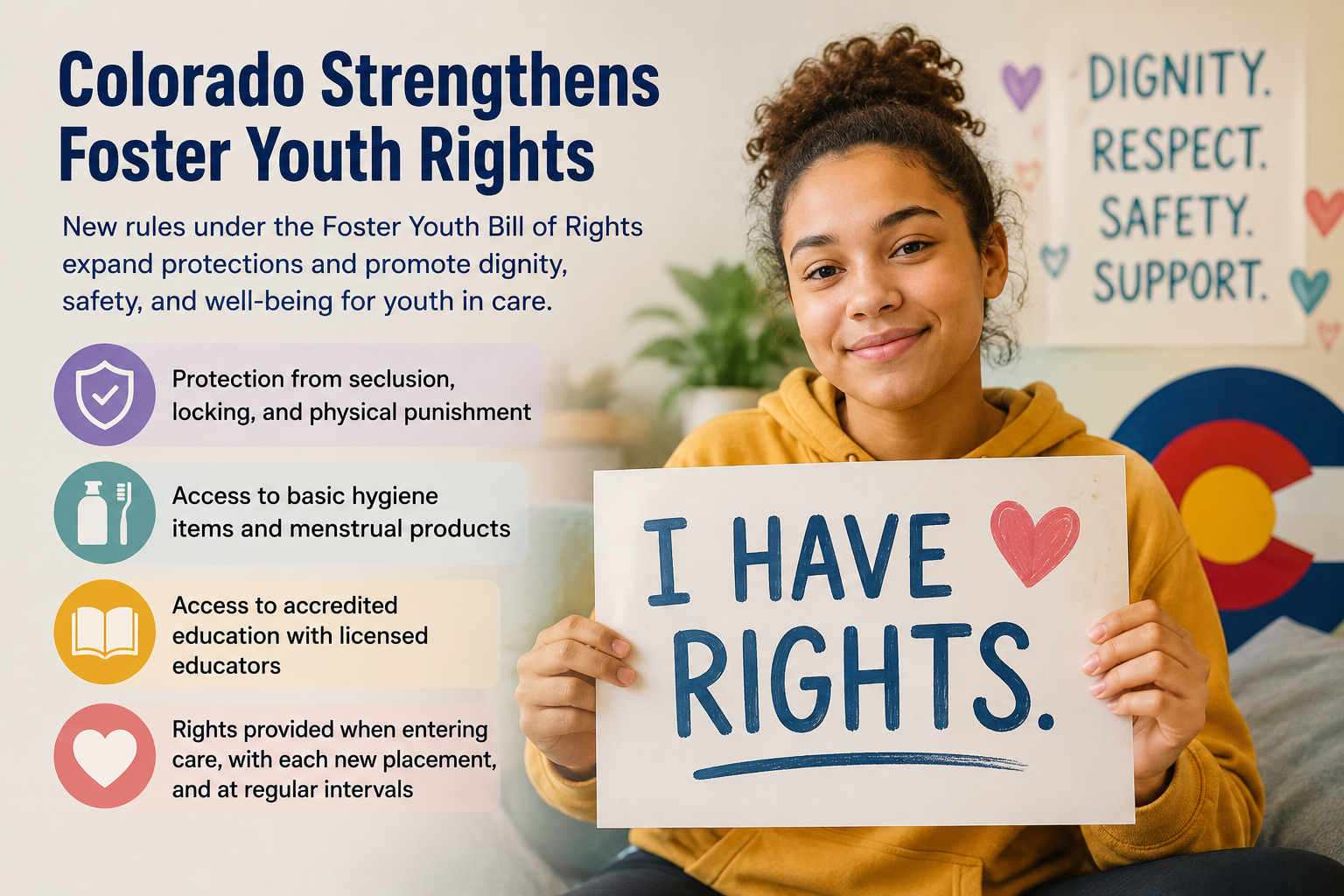
Colorado is preparing to implement new rules designed to strengthen protections for children and youth in foster care under the state’s Foster Youth Bill of Rights. The legislation, originally passed in 2024, establishes clear rights for foster youth and outlines standards intended to improve their safety, dignity, and well-being.
The new rules would prohibit practices such as placing children in seclusion, locking them alone in rooms or buildings, or using physical exercise as punishment. Foster youth would also be guaranteed access to basic hygiene items, including toothpaste, shampoo, clean washcloths, and menstrual products. Additionally, children in foster care must be provided access to accredited educational programs taught by licensed educators.
The law requires that foster youth ages 5 through 21 receive a copy of their rights when they enter foster care, whenever they move to a new placement, and at regular intervals throughout their time in care. The legislation was developed in response to testimony from current and former foster youth who shared concerns about their experiences within the child welfare system.
The Colorado Department of Human Services is expected to finalize implementation rules later this year. At the same time, state officials reported progress in family reunification efforts, noting that more than half of children who exited foster care in 2025 were reunified with their biological parents—the highest rate recorded in recent years.
Why It Matters
The Foster Youth Bill of Rights aims to ensure that children and youth in foster care are treated with respect, have access to essential resources, and understand the rights and protections available to them while in care. Advocates hope the new standards will create more consistent and supportive experiences for foster youth across Colorado.
Read the original article: The Colorado Sun – Colorado Foster Kids Are Getting New Rights About Pronouns, Punishment and More
Washington Foster Care System Updates LGBTQ+ Foster Parent Policy Following Legal Settlement
Washington State has reached a legal settlement that changes how foster parent licensing requirements address LGBTQ+ youth. The agreement resolves a lawsuit filed by foster parents who argued that previous licensing requirements requiring the use of a child’s preferred pronouns conflicted with their religious beliefs.
Under the settlement, the Washington State Department of Children, Youth, and Families (DCYF) can no longer require prospective foster parents to affirm a child’s sexual orientation or gender identity as a condition of receiving or renewing a foster care license. The revised policy also prohibits denying a foster care license solely based on an applicant’s religious views regarding marriage, gender, or sexual relationships.
State officials emphasized that the settlement does not require LGBTQ+ youth to be placed in homes that may not be able to meet their individual needs. DCYF retains the authority to determine appropriate placements and may choose not to place a child with a foster family that cannot adequately support that child’s well-being. Foster parents must also continue to allow youth access to supportive adults, services, and community resources.
The policy change places Washington among several states that have recently modified foster care licensing requirements following legal challenges related to religious freedom and LGBTQ+ affirmation policies. The decision has generated discussion among child welfare professionals, foster families, advocacy organizations, and policymakers regarding how best to balance religious liberty protections with the needs of LGBTQ+ youth in foster care.
Read the original article: The Imprint – Washington Foster System Removes LGBTQ+ Protections in Lawsuit Settlement

New 2026 KIDS COUNT Data Book Highlights Progress and Ongoing Challenges for Children and Families
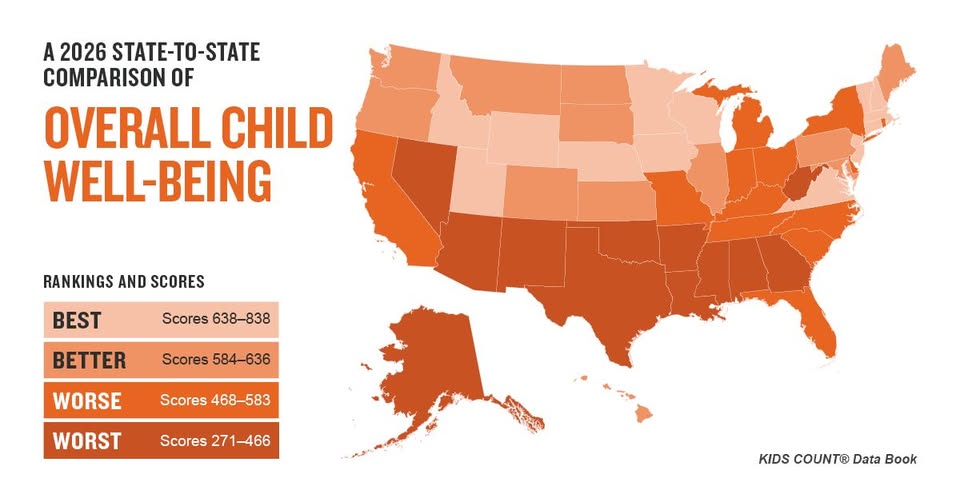
The Annie E. Casey Foundation has released its 2026 KIDS COUNT Data Book, providing a comprehensive look at the well-being of children across the United States. The report examines 16 key indicators across four areas that are critical to child success: Economic Well-Being, Education, Health, and Family & Community.
This year’s report paints a mixed picture. Since 2019, seven indicators have improved, seven have worsened, and two have remained unchanged. While there have been positive gains in areas such as child poverty, parental employment, educational attainment, and high school graduation rates, significant challenges remain for many children and families.
One of the most concerning findings is the continued struggle in education. Reading and math proficiency have declined, preschool participation has fallen, and nearly every state has experienced setbacks in educational outcomes since the COVID-19 pandemic. These trends highlight the lasting impact that educational disruptions have had on children nationwide.
The report also identifies ongoing health and economic concerns. Families continue to face housing affordability challenges, child and teen mortality rates remain troubling, and more than 1.2 million teens nationwide are disconnected from both school and work.
Despite these challenges, there are encouraging signs of progress. Teen birth rates have continued to decline, fewer children are living in high-poverty neighborhoods, and many states have seen improvements in family and community well-being indicators. These gains demonstrate that targeted investments and supportive policies can make a meaningful difference in the lives of children and families.
A new feature of the 2026 report is an enhanced scoring system that measures not only how states rank against one another but also how much progress they have made since 2019. The data shows that while 29 states experienced overall declines in child well-being, 15 states improved and six remained stable.
At Evergreen Caregiver Support, we recognize that children thrive when families and caregivers have access to the resources, education, support, and community connections they need. Reports like the KIDS COUNT Data Book help policymakers, educators, caregivers, and community organizations better understand where support is needed most and where investments can create lasting positive outcomes for future generations.
We encourage caregivers, parents, educators, and community leaders to review the findings and consider how we can work together to strengthen opportunities for children throughout Washington State and across the nation.
Learn More: The full 2026 KIDS COUNT Data Book is available from the Annie E. Casey Foundation. http://aecf.org/databook
Landmark Legal Defeat: Meta Ordered to Pay $375 Million in New Mexico Child Safety Lawsuit
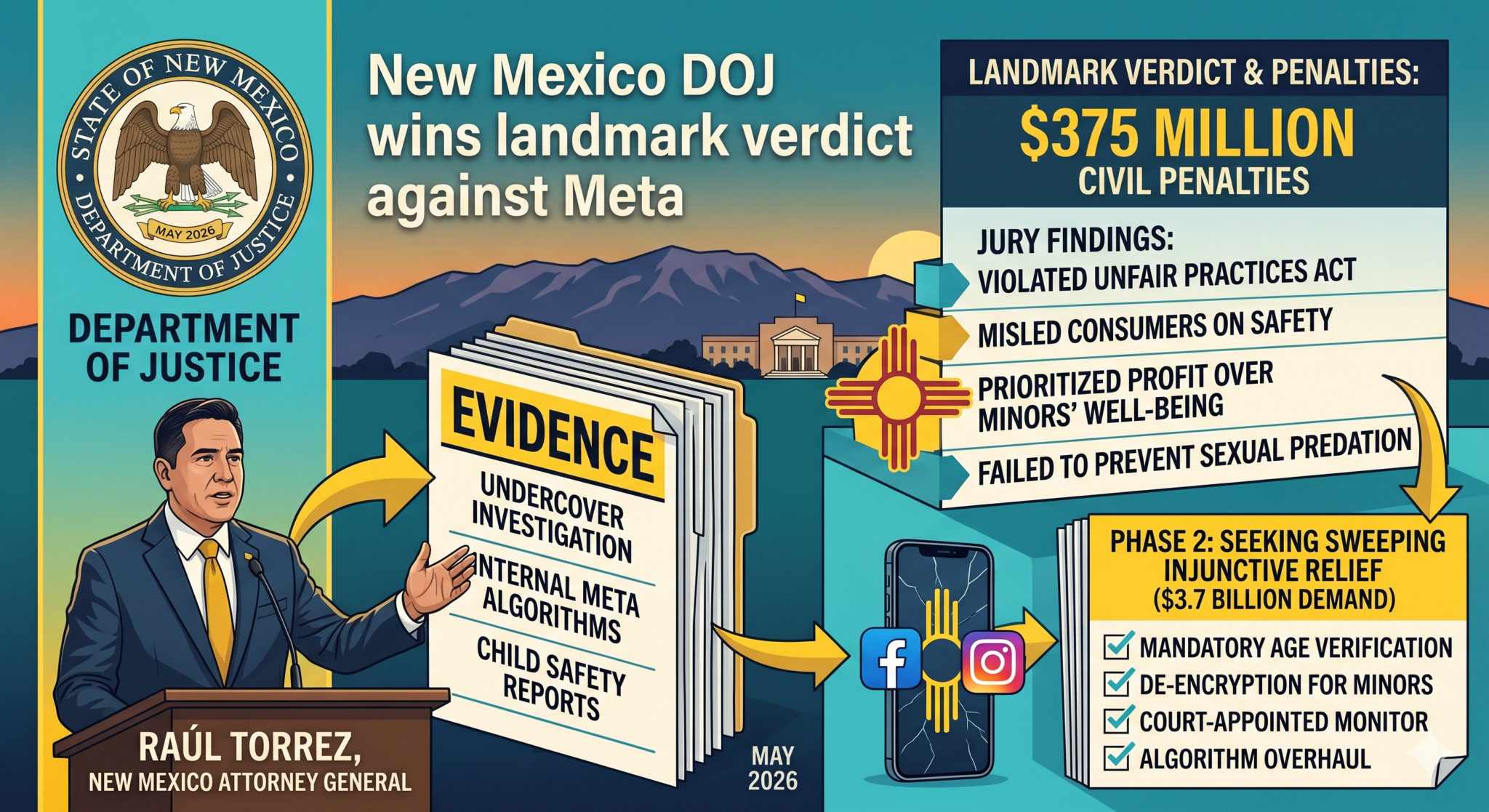
In a historic blow to Big Tech, a New Mexico jury has found Meta Platforms, Inc. liable for violating state consumer protection laws, ordering the social media giant to pay $375 million in damages. The verdict, reached on March 24, 2026, marks the first time a state has successfully taken a major social media company to trial over systemic child safety failures.
The lawsuit, spearheaded by New Mexico Attorney General Raúl Torrez, alleged that Meta—the parent company of Facebook, Instagram, and WhatsApp—knowingly prioritized profit over the safety of its youngest users. Jurors concluded that Meta willfully violated the New Mexico Unfair Practices Act by misleading families about platform safety while failing to protect children from sexual exploitation and addictive design features.
A “Historic Victory” for Child Safety
During the seven-week trial, prosecutors presented internal documents and testimony from whistleblowers showing that Meta executives disregarded warnings from their own safety experts. Evidence revealed that 2019 changes to Facebook Messenger’s encryption limited the company’s ability to report child abuse, while algorithms continued to steer predators toward underage accounts.
“This verdict is a historic victory for every child and family who has paid the price for Meta’s choice to put profits over kids’ safety,” said New Mexico Attorney General Raúl Torrez. “Meta executives knew their products harmed children, lied to the public about what they knew, and today, the law has finally held them accountable.”
The Battle Escalates: Phase 2 and the $3.7 Billion Demand
The $375 million verdict was only the beginning. As of May 2026, the case has moved into a second “remedies” phase before a judge. The State of New Mexico is now seeking an additional $3.7 billion in penalties and a court-ordered overhaul of Meta’s operations.
Proposed changes currently under review by the court include:
- Mandatory Age Verification: Implementing robust tools to prevent children under 13 from accessing the platforms.
- De-encryption for Minors: Removing end-to-end encryption for users under 18 to allow for better monitoring of predatory behavior.
- Guardian Accounts: Requiring all minor accounts to be linked to a verified parent or guardian.
- Design Changes: Eliminating “addictive” features like infinite scroll and auto-play for younger users.
Empowering Families Online
While the legal battle plays out in the courts, experts emphasize that systemic change also begins at home. This landmark case underscores why parents, caregivers, and adults in children’s lives need to be actively educating and empowering them to make safe decisions online.
Families are highly encouraged to implement a Family Internet Usage Contract to establish clear digital boundaries. For those looking for guidance on how to start these critical conversations, The Internet Safety Workbook for Tweens is an excellent resource available now at local bookstores and online retailers.
Meta’s Response and the Road Ahead
Meta has expressed strong disagreement with the jury’s findings and has officially filed for an appeal. A company spokesperson stated that Meta remains “confident in our record of protecting teens online” and argued that the proposed mandates are “impractical” and could infringe on free speech. In recent weeks, Meta has even suggested it could suspend its services in New Mexico if the court imposes extreme design requirements.
As this landmark case continues, it sets a major legal precedent for dozens of other states currently pursuing similar litigation against social media companies.
Centene Expands Foster Care Centers of Excellence to Support Children and Caregivers

Centene Corporation is highlighting the impact of its Foster Care Centers of Excellence (FCCOE) model, which provides specialized, trauma-informed healthcare services for children and youth involved in the child welfare system. As one of the nation’s largest providers of Medicaid services for children in foster care, Centene currently serves nearly 250,000 children across 21 states through partnerships with state child welfare and healthcare systems.
The Centers of Excellence are designed to address the unique physical, behavioral, and developmental needs of children who have experienced trauma, instability, and placement changes. According to Centene, children receiving care through these specialized clinics are more likely to receive timely well-child visits, stay up to date on immunizations, and receive appropriate follow-up care after emergency department visits.
The program brings together healthcare providers, caregivers, child welfare professionals, and community organizations to improve care coordination and reduce barriers to services. By focusing on trauma-informed care and consistent healthcare access, the initiative aims to improve long-term outcomes for children and youth in foster care while providing additional support to foster, kinship, and adoptive families.
For caregivers, access to coordinated healthcare and knowledgeable providers can play a critical role in helping children heal, thrive, and achieve greater stability during and after their time in care.
Child Trends Research Examines Family Reunification After Foster Care
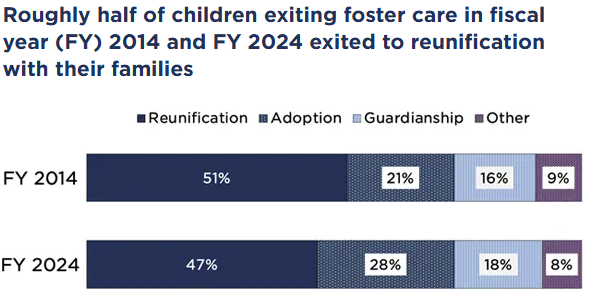
A recent research publication from Child Trends highlights the importance of family reunification as the most common permanency outcome for children exiting foster care. Reunification occurs when children are safely returned to the care of their parents or primary caregivers after the issues that led to their removal have been addressed.
The research examines factors associated with successful reunification and the challenges families may face following a child’s return home. According to Child Trends, nearly half of children who exit foster care are reunified with their families, making it the leading permanency outcome within the child welfare system.
Researchers found that successful reunification is often supported by strong family engagement, access to services, stable housing, substance use treatment when needed, and ongoing community support. Children and families may continue to benefit from services after reunification to help maintain stability and reduce the likelihood of re-entering foster care.
The findings reinforce the child welfare system’s primary goal of safely preserving and strengthening families whenever possible. For foster, kinship, and adoptive caregivers, understanding the reunification process can help support children through transitions while recognizing the importance of maintaining family connections and promoting long-term well-being. Research has consistently shown that permanency and stable relationships are critical factors in positive outcomes for children and youth who have experienced foster care.
Family reunification is recognized each year during National Reunification Month in June, a time to celebrate families who have successfully overcome challenges and safely reunified with their children. The Child Trends publication contributes to ongoing discussions about how child welfare agencies, caregivers, and communities can work together to support families on the path to reunification.
Read the original research: https://www.childtrends.org/publications/children-foster-care-reunited-with-families
Arkansas Launches Trump Savings Accounts for Youth in Foster Care
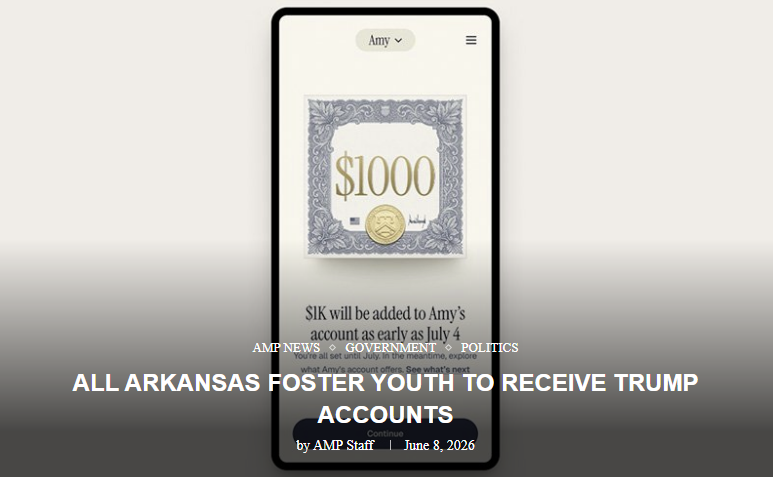
Arkansas officials have announced plans to provide eligible youth in foster care with financial investment accounts through the federal Trump Accounts program. The initiative is intended to help young people build long-term financial stability and provide a foundation for adulthood as they transition out of foster care.
Under the program, eligible children receive an initial government-funded contribution that can grow over time through investment earnings. State leaders say the accounts are designed to promote financial literacy, encourage long-term savings, and help foster youth build assets that may support future educational, housing, or career goals.
Advocates for youth in foster care have long highlighted the financial challenges many young people face when leaving the child welfare system. Limited family resources, housing instability, and barriers to higher education can make the transition to adulthood particularly difficult. Programs that provide financial assets and savings opportunities are increasingly being explored as a way to improve long-term outcomes for youth with foster care experience.
Arkansas joins a growing number of states and organizations looking for innovative ways to support young people beyond their time in care. While financial resources alone cannot address every challenge facing youth transitioning to adulthood, supporters believe these accounts may help provide an additional measure of stability and opportunity as young people work toward independence.
Read the original article: https://armoneyandpolitics.com/arkansas-foster-trump-accounts/
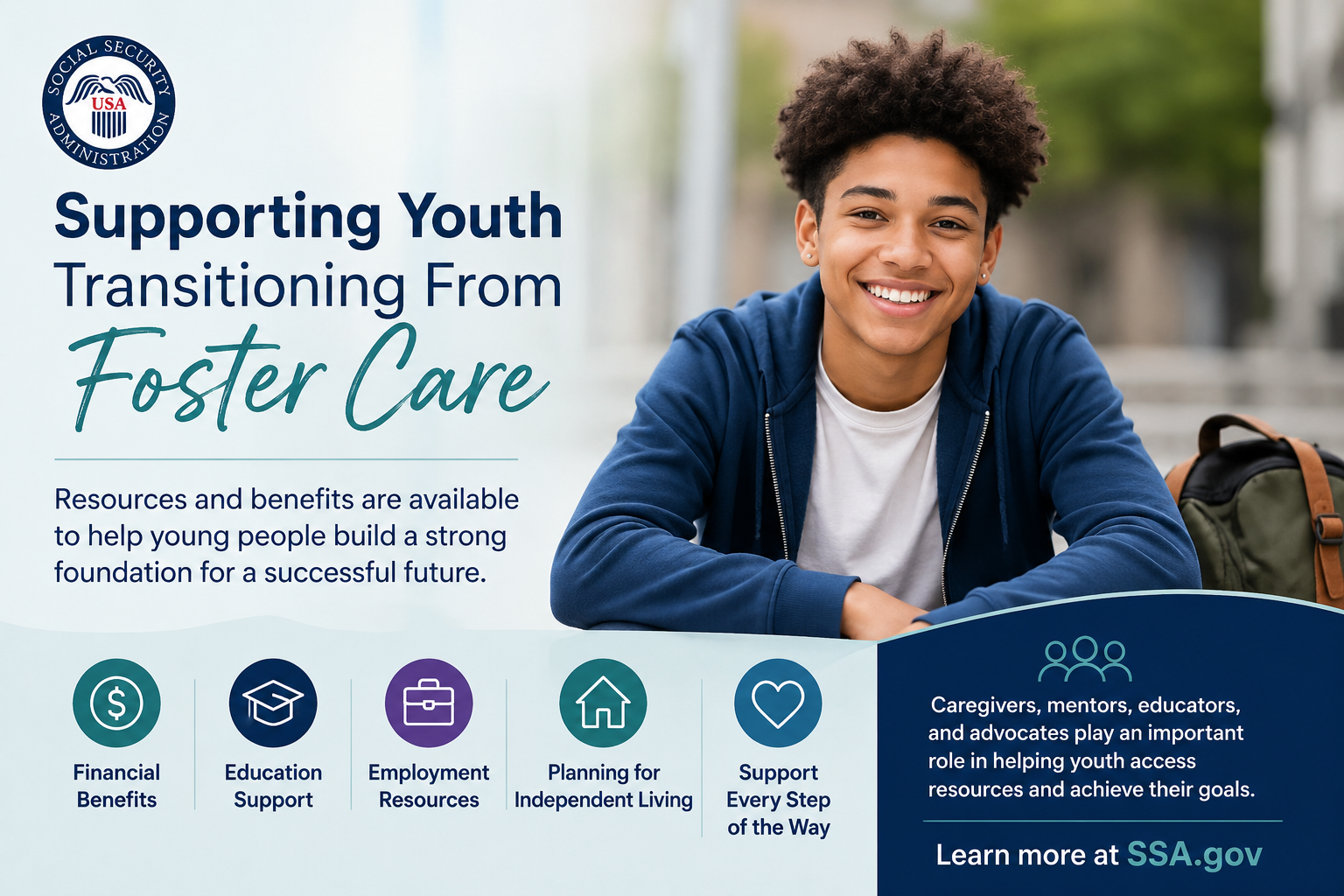
Social Security Administration Highlights Resources for Youth Transitioning From Foster Care
In recognition of National Foster Care Month, the Social Security Administration (SSA) recently highlighted programs and resources available to support youth as they transition from foster care into adulthood. The agency emphasized the importance of helping young people understand available benefits, financial resources, and support systems that can contribute to long-term stability and independence.
According to the SSA, some youth in foster care may be eligible for benefits such as Supplemental Security Income (SSI), survivor benefits, or benefits connected to a parent’s Social Security retirement or disability record. Understanding these programs can help young adults access financial support while pursuing education, employment, housing, and other important life goals.
The agency also promoted its Youth Toolkit, a collection of resources designed to help youth, caregivers, educators, advocates, and service providers navigate the transition to adulthood. Topics covered include Social Security benefits after age 18, employment supports, financial literacy, healthcare considerations, educational opportunities, and planning for independent living.
For foster, kinship, and adoptive caregivers, these resources can provide valuable information to help prepare young people for adulthood and connect them with available services. The SSA noted that supportive adults, including caregivers, relatives, mentors, educators, and social workers, play a critical role in helping youth build confidence and successfully navigate life after foster care.
As young people prepare to age out of foster care or transition into independent living, access to accurate information and financial resources can help create a stronger foundation for future success. The Social Security Administration encourages caregivers and advocates to familiarize themselves with available programs and share these resources with youth who may benefit from them.
Read the original article: https://www.ssa.gov/blog/en/posts/2026-05-27.html