Internet Safety & Warning Signs of Online Grooming
In an era where 70% of teens check social media almost constantly or hourly, the digital world is no longer just a hobby, it is where they live. This training bridges the gap between modern technology and adolescent development, explaining why the teenage brain is uniquely prone to high-risk behavior and reward-seeking through digital platforms.
Participants will move beyond basic “internet safety” to understand the sophisticated tactics used by predators, including crowdsourcing exploitation and livestreaming child sexual exploitation (LCSE). The session provides a deep dive into the legal, psychological, and social realities of online grooming and human trafficking.
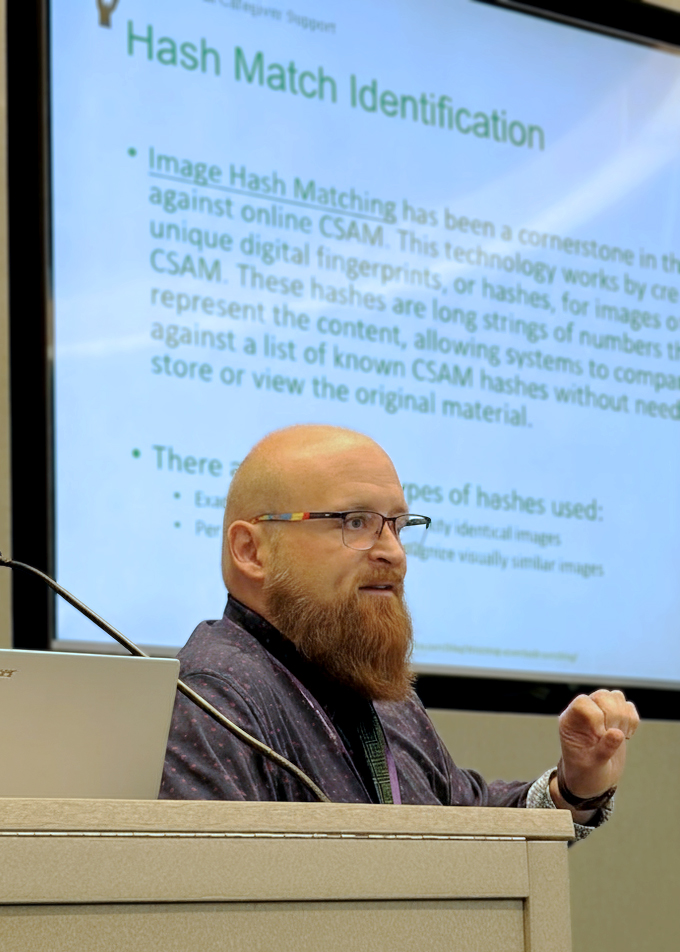
What You Will Learn:
- The Adolescent Digital Experience: Analyze the drastic increase in social media usage and how “nomophobia” (fear of being away from a phone) affects 63% of adolescents.
- The Science of Vulnerability: Explore how the developing prefrontal cortex and amygdala make teens more impulsive and susceptible to online manipulation.
- Decoding Grooming Tactics: Learn the four critical stages of online grooming: Information Gathering, Buying the Friendship, Building Dependence, and Control & Pressure.
- Identifying Red Flags: A guide to dangerous apps (including “vault” apps used to hide content), age restrictions, and a “decoder” for emojis used in exploitative contexts.
- Critical Definitions: Clarify the differences between CSEC (Commercial Sexual Exploitation of Children), CSAM (Child Sexual Abuse Material), and Sextortion.
- Real-World Trends: Review local and global statistics, including the $150 billion global industry of human trafficking and the specific risks in Washington State.
Practical Tools for Caregivers & Professionals
This training doesn’t just present the “dark side” of the web; it provides actionable steps for intervention.
- D.E.T.E.C.T. (Digital Exploitation & Threat Evaluation for Child Trafficking) is a screening tool and guidance resource designed to help practitioners identify technology-facilitated grooming, coercion, and exploitation risks in youth. It provides mental health professionals with structured assessment questions and follow-up considerations to evaluate digital safety, online vulnerabilities, and potential financial or sexual harm.
- The What Is Sextortion trifold: Provides practical tips, supportive guidance, and conversation starters to help parents and caregivers navigate this important topic with their child. – Click Here
- The Family Internet Usage Contract is a customizable guide that helps families establish clear digital safety rules and set healthy online boundaries together. – Click Here
- The Youth Internet Safety Review Worksheet provides parents and caregivers with a practical, structured tool to evaluate digital risks, discuss online habits, and establish clear safety boundaries with children and teens. – Click Here
- The Parent’s Guide to Apps: Insights into messaging, dating, and “anonymous” apps.
- Trauma-Informed Language: How to shift from harmful victim-blaming language to supportive, accurate terminology.
- Reporting Procedures: Step-by-step guidance on taking screenshots and making reports to the NCMEC CyberTipline (1-800-THE-LOST).
Youth are often seeking validation, love, and connection. This training emphasizes starting from a place of compassion—reminding caregivers that exploitation is never the child’s fault.
Ready to strengthen your system of care? Click here to use our Training Request Form