
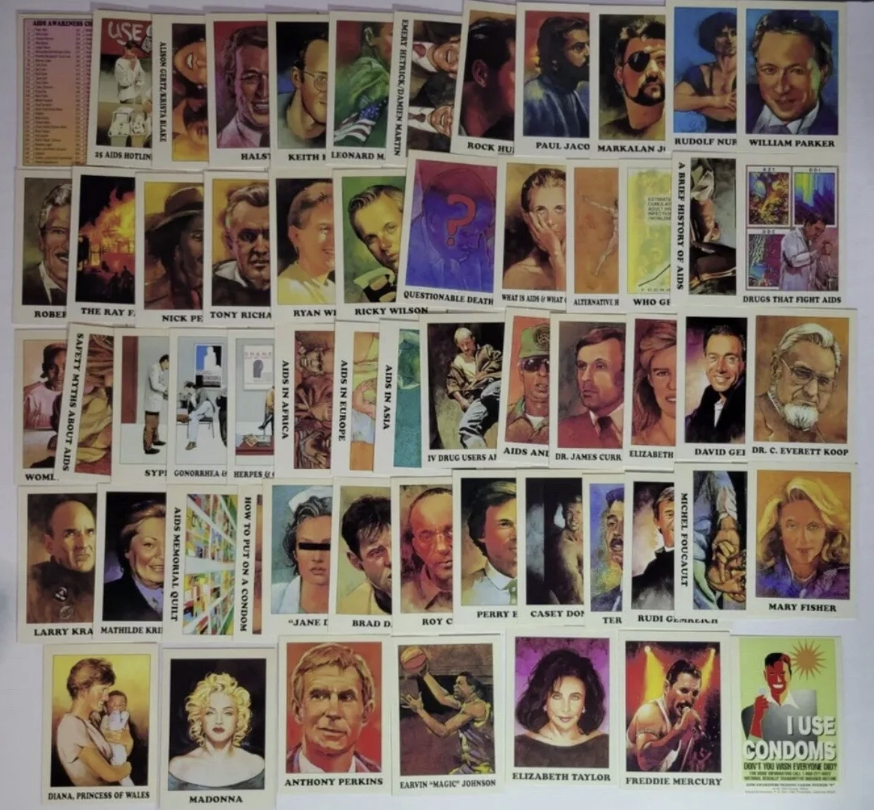
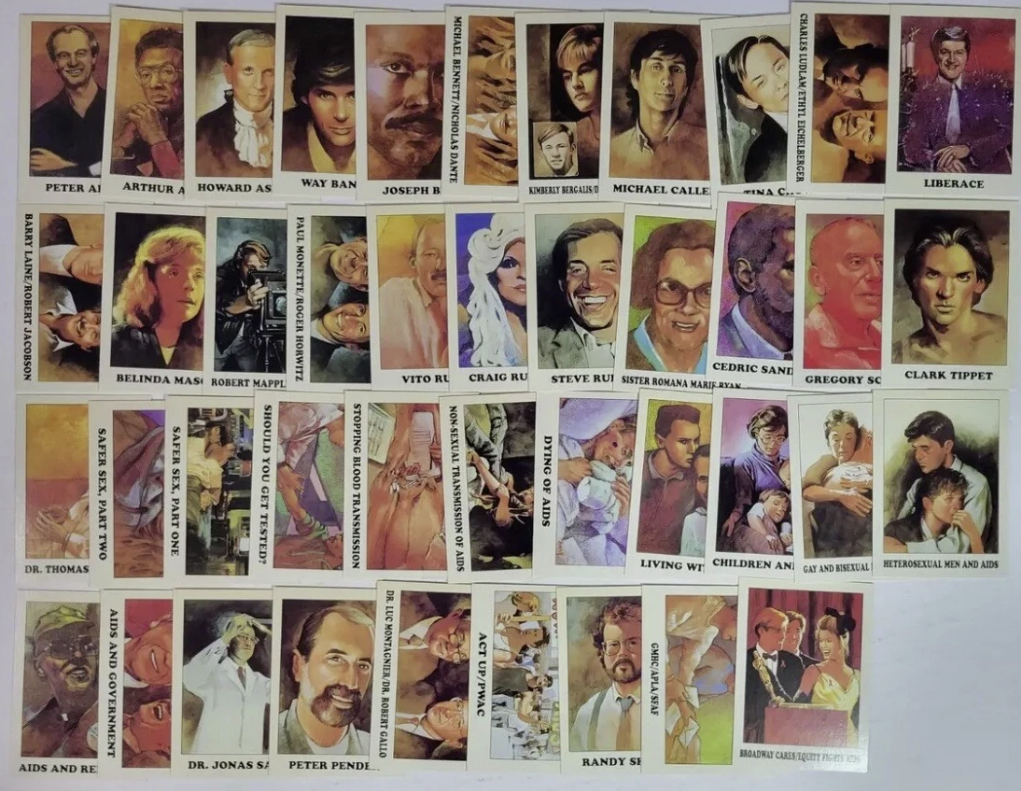
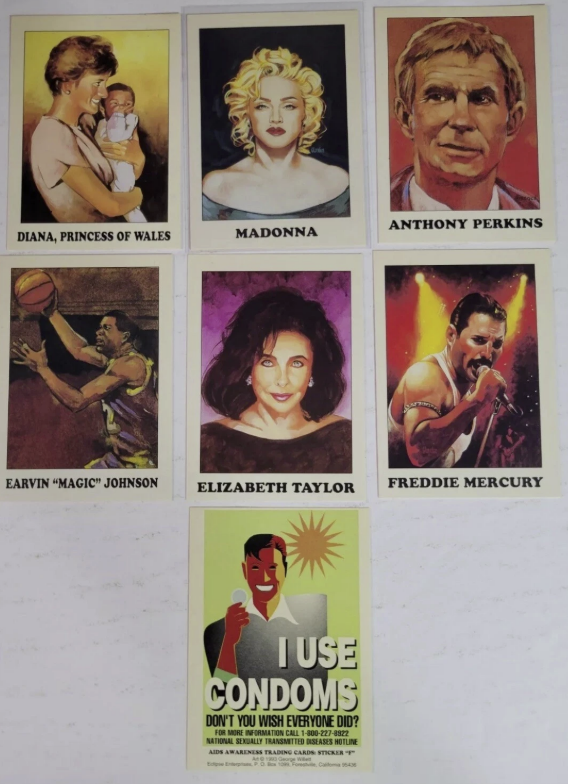
The 1993 AIDS Awareness trading card set, produced by Eclipse Enterprises, was a groundbreaking educational and activist project designed to humanize the HIV/AIDS epidemic and provide direct public health information during a period of intense social stigma. The set was far more than a collectible; it was an act of “guerrilla public health” during the peak of the HIV/AIDS epidemic in America. At a time when government-funded education was often criticized for being too slow or too vague, Eclipse Enterprises used the format of trading cards traditionally for kids and hobbyists to force a conversation about safety, stigma, and science.
The Historical Context: “Edutainment” as Activism
Eclipse Enterprises, primarily a comic book publisher, pivoted to “non-fiction” trading cards in the late 1980s. Under editor Catherine Yronwode, they produced sets on the JFK assassination, the Savings and Loan scandal, and most controversially, True Crime (Serial Killers).
The AIDS set was the humanitarian peak of this series. It was released in a year (1993) when:
- AIDS was the leading cause of death for U.S. men aged 25–44.
- The Red Ribbon (featured on Card #107) had only recently become a global symbol after being popularized at the 1991 Tony Awards.
- Hollywood was just beginning to address the crisis (the movie Philadelphia was released the same year).
The Cards Program & Meaning
The program was led by Catherine Yronwode (editor) and written by a team including William Livingstone and Althaea Yronwode. Its primary “meaning” was twofold: education and memorialization.
- Destigmatization: By featuring a wide array of figures—from Hollywood legends and sports stars to nurses and religious figures—the set emphasized that AIDS did not discriminate by race, class, or sexuality.
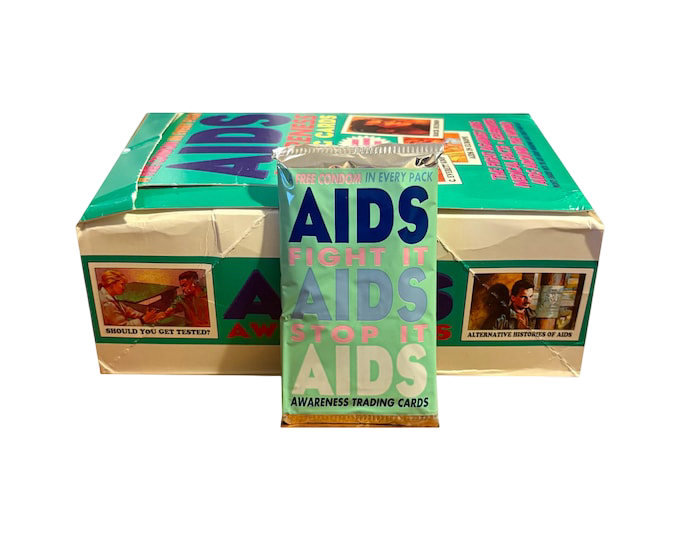
- The “Safe Sex” Message: Most famously, each foil pack of 12 cards included a functioning condom. This was a radical act of health activism aimed at the youth and collector demographics, though it caused significant controversy and led to the cards being banned in some retail chains.
- Philanthropy: Eclipse donated 15% of all proceeds to Broadway Cares/Equity Fights AIDS, making the cards a direct fundraising tool.
- Artistic Legacy: The cards featured original portraiture by Charles Hiscock and Greg Loudon, moving away from the “shock” photography often seen in 1990s media toward more dignified, illustrative tributes.
The set concludes with a focus on international activism (Cards #78–83), documenting how the crisis was playing out globally, and providing the 25 National AIDS Hotlines (Card #109)—a precursor to the digital information age where the cards themselves acted as a portable resource for those too afraid to ask for help in person.