

Marked for Persecution: Gay Men in Nazi Concentration Camps
This World War II exhibit by Evergreen Caregiver Support examines one of the most overlooked victim groups of the Holocaust through the history and legacy of the Pink Triangle, an identification badge used in Nazi concentration camps to mark men imprisoned for alleged homosexuality. Under Paragraph 175 of the German Criminal Code, thousands of men were arrested and deported, where those forced to wear the pink triangle endured extreme brutality, isolation, dangerous forced labor, and some of the highest mortality rates among prisoner groups.
At the center of the display is a rare pink triangle artifact preserved by Tuviah Friedman (1922–2011), a Holocaust survivor, Nazi hunter, and documentarian. Archival records suggest the fragment likely belonged to a young prisoner who perished after forced labor at Buchenwald concentration camp. The artifact stands as powerful evidence of a system of persecution that sought not only to imprison, but to erase gay men from society.
This exhibit also confronts the long aftermath of that persecution. Because Paragraph 175 remained in effect in Germany for decades after World War II, many survivors were denied recognition, reparations, and inclusion in memorials and survivor organizations well into the late twentieth century. Their suffering continued long after liberation, shaped by silence, stigma, and exclusion.
“History doesn’t disappear just because it’s uncomfortable,” says Nathan LaChine, founder of Evergreen Caregiver Support. “When stories like these are ignored or erased, the harm continues. Preserving this history isn’t about looking backward—it’s about understanding how easily human rights can be taken away, and why remembering the people who were silenced matters now more than ever.”
Through Friedman’s preservation efforts and his memoir The Hunter, this display expands Holocaust remembrance to include victims whose suffering was ignored for generations. As Friedman wrote, “I did not hunt for revenge. I hunted so the world could not say it did not know.”
The Pink Triangle Artifact
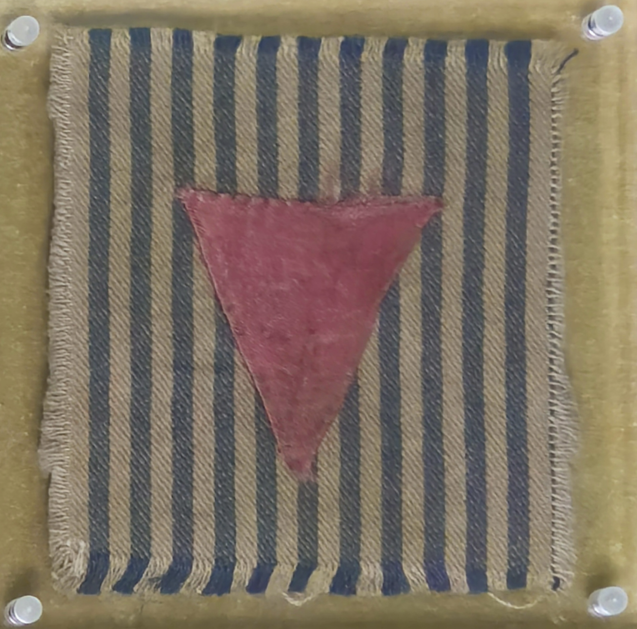
At the center of the display is a rare pink triangle artifact preserved by Tuviah Friedman (1922–2011), a Holocaust survivor, Nazi hunter, and documentarian. Archival records indicate the fragment likely belonged to a young prisoner who perished after forced labor at Buchenwald concentration camp.
This artifact stands as powerful evidence of a system of persecution that sought not only to imprison, but to erase gay men from society.
After Liberation: A History of Silence
This exhibit also addresses the long aftermath of that persecution. Because Paragraph 175 remained in effect in Germany for decades after World War II, many survivors were denied recognition, reparations, and inclusion in memorials and survivor organizations well into the late twentieth century. For many, liberation did not mean freedom—their suffering continued through silence, stigma, and exclusion.
Preserving History That Was Ignored
“History doesn’t disappear just because it’s uncomfortable,” says Nathan LaChine, founder of Evergreen Caregiver Support. “When stories like these are ignored or erased, the harm continues. Preserving this history isn’t about looking backward—it’s about understanding how easily human rights can be taken away, and why remembering the people who were silenced matters now more than ever.”
Tuviah Friedman: Bearing Witness
Through Friedman’s preservation efforts and his memoir The Hunter, this display expands Holocaust remembrance to include victims whose suffering was ignored for generations. As Friedman wrote, “I did not hunt for revenge. I hunted so the world could not say it did not know.”