Symbols
Nazi Classification Badges of the Holocaust
Educational Memorial Poster
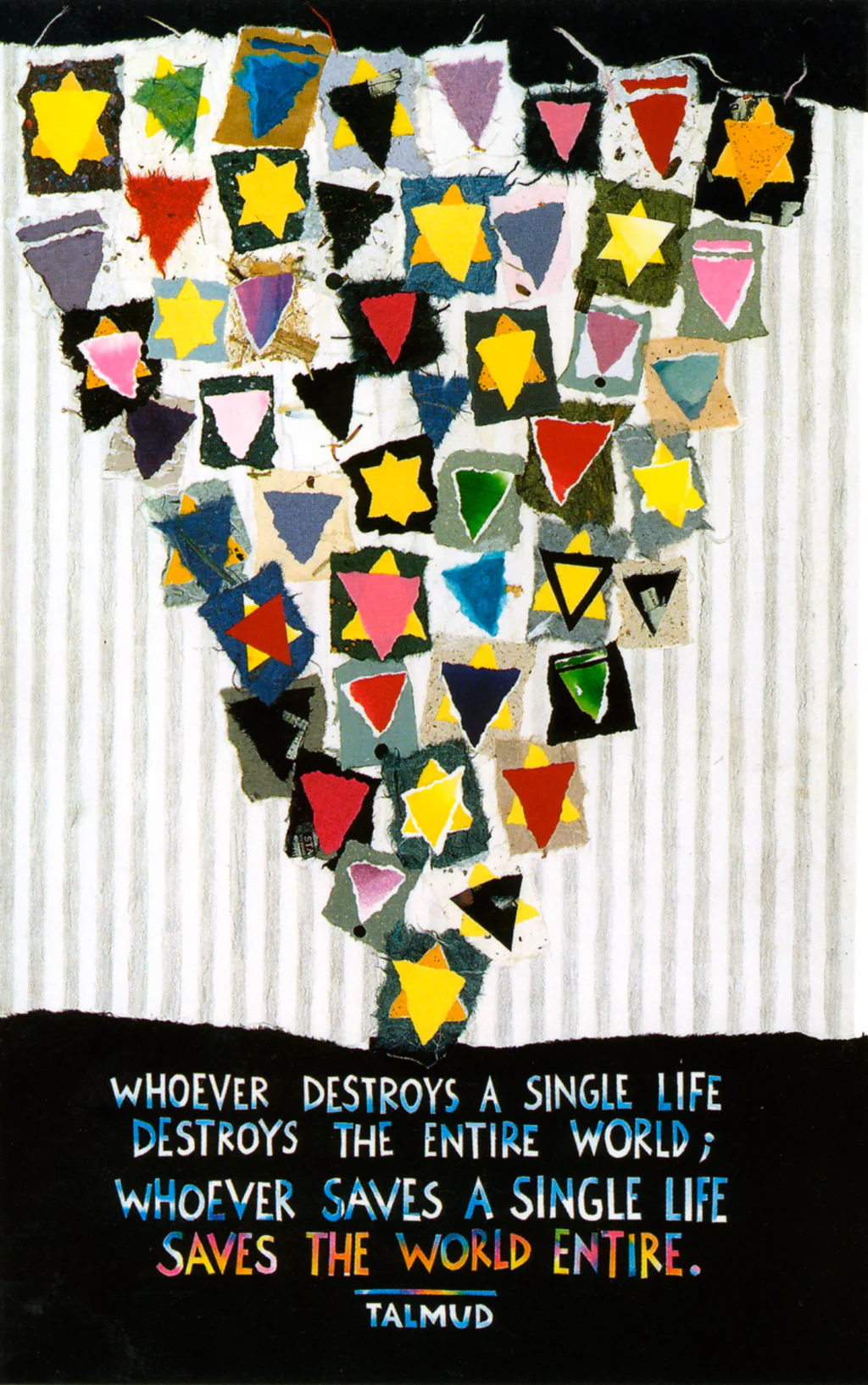
This educational memorial poster presents many of the identifying symbols used by Nazi Germany before and during World War II to classify individuals imprisoned in concentration camps. Rather than recognizing people for who they were, the Nazi regime reduced millions of lives to colored badges sewn onto prison uniforms, assigning categories based on religion, political beliefs, nationality, ethnicity, sexual orientation, and other characteristics.
At the center of the composition, the various colored triangles and Stars of David are arranged in the shape of a large inverted triangle, symbolizing the systematic persecution of countless individuals. Each badge represents a human life and serves as a powerful reminder of the devastating consequences of hatred, discrimination, and state-sponsored oppression.
Among the symbols represented are:
- Yellow Star of David – Jewish people
- Pink Triangle – Homosexual men
- Black Triangle – Individuals labeled “asocial,” including many lesbians and others persecuted by the regime
- Purple Triangle – Jehovah’s Witnesses
- Red Triangle – Political prisoners
- Brown Triangle – Roma and Sinti (Gypsy) prisoners
- Blue Triangle – Emigrants and stateless persons
Many prisoners were forced to wear multiple badges, reflecting intersecting identities or additional classifications such as nationality, repeat offenses, or alleged escape risk. The system became one of the most recognizable methods of dehumanization employed throughout the Holocaust.
Inscribed beneath the artwork is the well-known passage from the Talmud:
“Whoever destroys a single life destroys the entire world; whoever saves a single life saves the world entire.”
This message serves as both a memorial and a moral reminder that every individual life possesses immeasurable value.
This poster has been displayed in Holocaust museums and educational institutions internationally as a teaching resource about Nazi persecution and the importance of remembrance. It was made possible through the generosity of Debbie and Al Gaynes in memory of Chaim Ariyeh Chasan, who perished in Vilna in October 1941.
Today, this work continues to educate new generations about the dangers of prejudice and authoritarianism, while reminding us of the profound consequences of reducing people to symbols rather than recognizing their humanity. To explore more of Amy’s work, CLICK HERE.
FAM Collection Note
This educational poster has been preserved within the FAM Collection as part of the museum’s commitment to documenting LGBTQ+ history, Holocaust remembrance, and the ongoing fight against discrimination. By preserving works such as this, FAM seeks to ensure that the stories of those persecuted under the Nazi regime—including Jewish people, LGBTQ+ individuals, Roma and Sinti, political prisoners, Jehovah’s Witnesses, people with disabilities, and countless others—remain accessible for education, reflection, and remembrance for future generations.
Share the Post:
Explore the Collection