The Love Tree: A Story to Help Children Understand Open Adoption
Celebrating Family, Connection, and Belonging
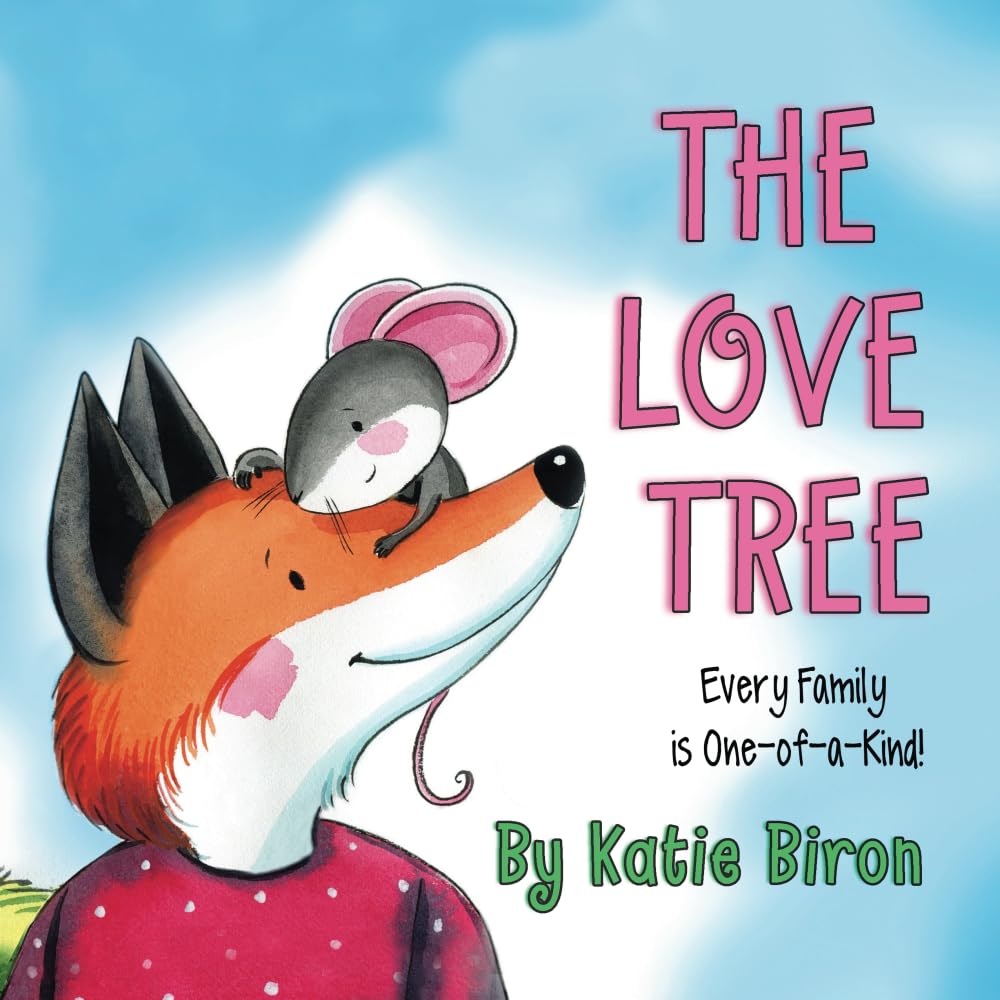
The Love Tree by Katie Biron is a warm and thoughtfully written children’s book that introduces young readers to the concept of open adoption while celebrating the many different ways families can be formed.
The story follows Little Mouse, an adopted child who is asked to complete a traditional family tree assignment at school. As Little Mouse begins working on the assignment, he realizes that the traditional family tree doesn’t have enough spaces for everyone who is part of his family. With two mothers, two fathers, siblings, grandparents, and other people who love him, Little Mouse is faced with an uncomfortable question: How can he fit his whole family into a family tree designed for only one kind of family? His mother helps him find a different solution the Love Tree. Instead of asking Little Mouse to choose who belongs, the Love Tree allows him to celebrate everyone who loves him.
When Traditional Family Trees Don’t Tell the Whole Story
Family-tree assignments may seem like simple school activities, but for children whose families are shaped by adoption, foster care, kinship care, divorce, remarriage, same-sex parents, donor conception, or other circumstances, they can sometimes create difficult and uncomfortable situations. A traditional family tree may not provide space for every important person in a child’s life. For an adopted child, the assignment may force them to decide whether to include their first family or adoptive family—or leave important people out altogether. The Love Tree offers an alternative. Rather than defining family solely through biology, the story invites children to think about the people who are part of their lives and the relationships that matter to them.
Understanding Open Adoption
Open adoption can look different from family to family. Some children may have ongoing relationships with their first parents, siblings, grandparents, or other relatives. Others may have different levels of contact or connection. For children, understanding that they can love and belong to more than one family can be an important part of developing a healthy sense of identity. The Love Tree provides a gentle introduction to this concept without requiring children to choose one family over another. The story reinforces the idea that having an adoptive family does not erase a child’s first family and that loving one family does not mean loving another family less.
A Child-Centered Approach to Adoption
One of the strengths of The Love Tree is its focus on the child’s experience. The story does not present adoption as simply a story about adults becoming parents. Instead, it gives attention to the child navigating their own family relationships and identity. This child-centered approach can help caregivers think about how adoption is experienced from the child’s perspective. Children may have complicated feelings about adoption. They may experience love, gratitude, sadness, curiosity, loyalty, confusion, or grief—all sometimes at the same time. Providing children with language that allows them to acknowledge their entire family story can help create space for those feelings rather than requiring them to simplify their experience for the comfort of adults.
Honoring First Families
The Love Tree also provides an opportunity to talk about the importance of recognizing and respecting a child’s first family. Adoption does not erase the relationships, history, or experiences that came before adoption. For children in open adoptions, maintaining connections with first parents, siblings, grandparents, and extended family can be an important part of their identity and sense of belonging. The book can help caregivers communicate an important message: You don’t have to choose which people you love. A child can love their adoptive parents and their first family. They can feel connected to multiple homes, families, cultures, and communities.
Beyond Adoption: Every Family Is Different
Although The Love Tree was inspired by open adoption, its message extends far beyond adoption.
Families come in many forms!
Children may live with:
- Adoptive parents
- Foster parents
- Kinship caregivers
- Grandparents
- Single parents
- Stepparents
- Same-sex parents
- Blended families
- Siblings in different households
- Multiple generations
- Extended family members
- Other adults who play important roles in their lives
The Love Tree provides a way to talk about family that focuses less on fitting into a predetermined structure and more on recognizing the people who provide love, connection, support, and belonging.
Foster and Kinship Care
This book can also be a valuable resource for children in foster and kinship care. Children in foster care may have relationships with foster parents, biological parents, siblings, grandparents, relatives, previous caregivers, and other important adults. Traditional definitions of family may not adequately reflect those relationships. The Love Tree can help caregivers have conversations about the many people who can be important in a child’s life while reinforcing that the child does not have to erase one relationship to make room for another. For foster and kinship caregivers, this can be an especially helpful reminder that supporting a child’s connection to their family and history is part of supporting the child’s identity.
Why This Book Matters
At Evergreen Caregiver Support, we believe children deserve to see their experiences reflected in the books, conversations, and resources available to them. Children should not have to hide, explain, or choose between important parts of their family story simply because a worksheet, form, or social expectation was designed around a traditional family structure. The Love Tree provides caregivers with a gentle way to challenge those assumptions and help children understand that their family can be unique without being incomplete. The book was inspired by Katie Biron’s own experience as an adoptive parent when one of her children struggled with a traditional family-tree assignment. Biron recognized that the assignment could force children with nontraditional families to either disclose personal information or leave important family members out.
A Resource for Caregivers and Professionals
This book may be particularly helpful for:
- Foster and kinship caregivers
- Adoptive parents
- Families navigating open adoption
- Parents and guardians
- Adoption professionals
- Child welfare professionals
- Therapists and counselors
- Educators and school staff
- Family support professionals
- Children with blended or nontraditional family structures
It can also be a useful resource for educators and caregivers who want to reconsider traditional family-tree assignments and create more inclusive ways for children to talk about their families.
Book Information
- Title: The Love Tree: A Story to Help Children Understand Open Adoption
- Author: Katie Biron
- Format: Children’s Picture Book
- Topics: Open Adoption, Adoption, Foster Care, Kinship Care, Family Diversity, First Families, Family Identity, Belonging, Family Relationships, Connection
- Primary Focus: Helping children understand and celebrate families formed through open adoption and other diverse family structures
The book’s central story follows Little Mouse as he discovers that a traditional family tree cannot accommodate his unique family and creates a Love Tree instead—one that includes the many people who love him.
A Different Way to Think About Family
The Love Tree reminds us that family isn’t always something that can be neatly organized into boxes and branches. Sometimes a child’s family includes people who live in different homes. Sometimes children have more than one mother or father. Sometimes siblings live apart. Sometimes grandparents, relatives, foster parents, or other important adults become an essential part of a child’s support system. And sometimes a child simply needs to know that all of those relationships can matter. The Love Tree offers children a way to celebrate those connections without having to choose who belongs. For caregivers, it provides an opportunity to begin conversations about adoption, family identity, openness, belonging, and the many different ways families can look.
If you would like to learn more about this book or add it to your own library, Click Here.
Share the Post:
Explore the Collection