Let’s Talk About It
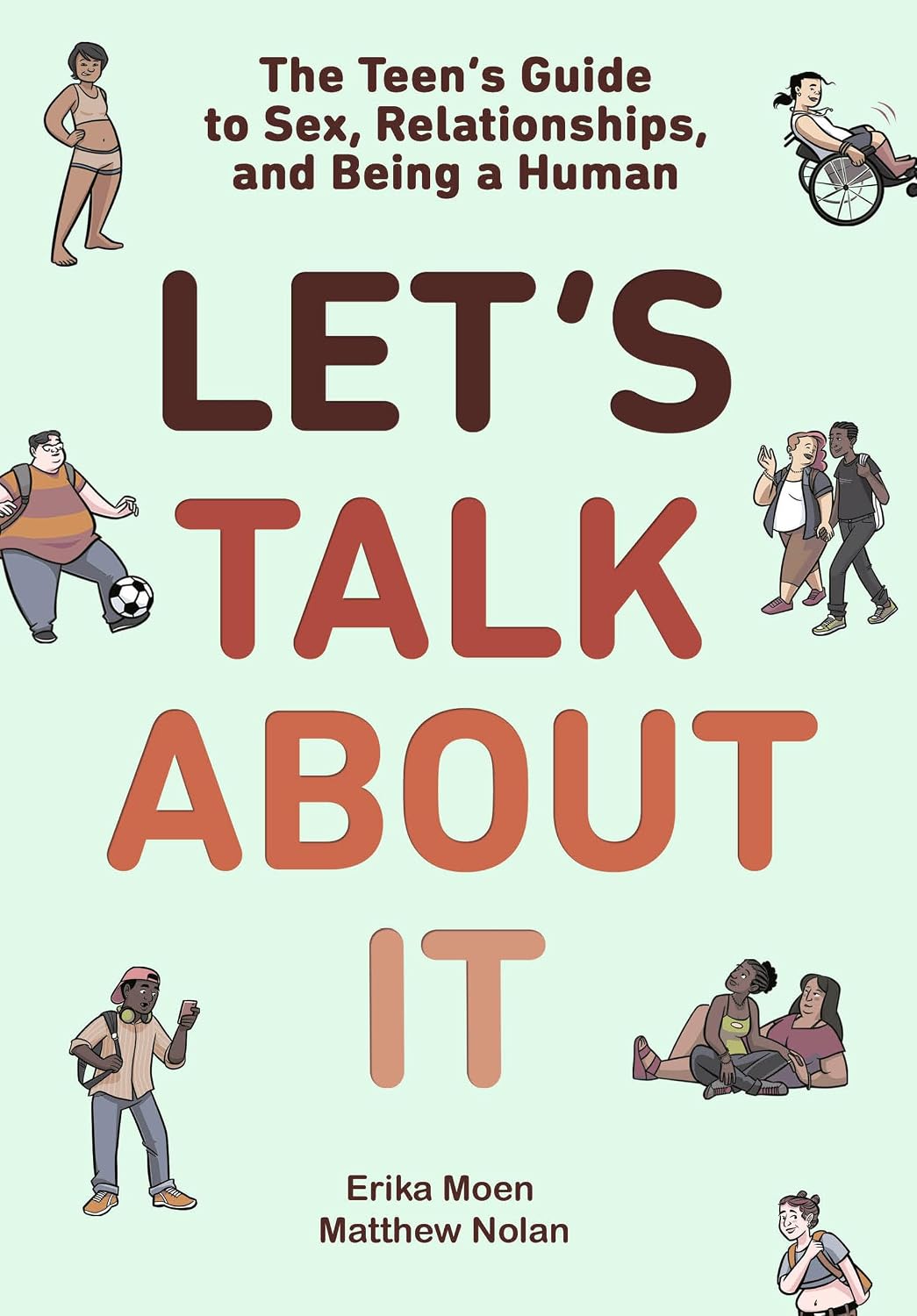
Let’s Talk About It: The Teen’s Guide to Sex, Relationships, and Being a Human
An Honest, Inclusive Guide to Growing Up, Relationships, Bodies, and Sexuality
Let’s Talk About It: The Teen’s Guide to Sex, Relationships, and Being a Human by Erika Moen and Matthew Nolan is a thoughtful, engaging, and comprehensive graphic novel designed to help teenagers navigate the many questions that come with growing up.
Using accessible language, humor, illustrations, and straightforward information, the book tackles topics that teens may be curious about but uncomfortable asking adults to explain. From relationships and gender identity to body image, consent, sexual health, sexting, jealousy, rejection, and sexuality, the book creates an opportunity for young people to explore these subjects in an informative and nonjudgmental way.
Growing Up Can Be Complicated
Adolescence brings enormous changes—physically, emotionally, socially, and relationally. Young people may have questions about their bodies, their feelings, their identities, and how they relate to other people. Let’s Talk About It recognizes that there is no simple instruction manual for growing up. Instead, it provides teens with information and language to help them better understand themselves and make informed decisions.
The book addresses questions surrounding:
- Relationships and friendships
- Gender and sexuality
- Body image
- Anatomy and body changes
- Consent and communication
- Sexual health
- Masturbation
- Sexting and digital communication
- Jealousy and rejection
- Pornography and sexual media
- Kinks and fantasies
- Aftercare and emotional well-being
The book’s table of contents reflects this broad approach, moving from relationships and identity through anatomy, sexual health, sexting, jealousy, rejection, and preparing for what comes next.
Creating Space for Honest Conversations
One of the strengths of Let’s Talk About It is its willingness to address topics that adults and young people may sometimes avoid. Instead of treating questions about sexuality as something shameful or inappropriate to discuss, the authors approach them as part of growing up and learning about oneself and relationships. For caregivers, this can provide an opportunity to move beyond simply telling teens what they should or should not do. It can help create conversations about why choices matter, how to communicate, how to recognize healthy relationships, and how to respect yourself and others.
Consent, Communication, and Healthy Relationships
Healthy relationships require communication, boundaries, respect, and an understanding of consent. The book provides teens with opportunities to explore what healthy relationships can look like while addressing complicated emotions such as jealousy, rejection, attraction, and uncertainty. These conversations are particularly important as young people begin developing romantic and sexual relationships. Understanding consent is not simply about saying yes or no it is also about communication, respect, recognizing another person’s boundaries, and understanding that people can change their minds.
Gender, Sexuality, and Identity
Adolescence can also be a time when young people are exploring questions about gender, sexuality, attraction, and identity. Let’s Talk About It provides information about gender and sexuality in a way that can help young people recognize that there is a wide range of human experiences. For LGBTQIA+ youth, having access to accurate and affirming information can be especially important. For caregivers and professionals, the book can also serve as a tool for developing a better understanding of the questions young people may be asking about themselves and the world around them.
Digital Life, Sexting, and Online Relationships
Today’s teens navigate relationships and sexuality in an increasingly digital world. Conversations about healthy relationships therefore need to include technology. The book addresses sexting and digital communication, providing an opportunity to discuss the potential risks, responsibilities, and consequences associated with sharing intimate images or messages. For caregivers, this can be an important starting point for conversations about digital boundaries, privacy, consent, pressure, image sharing, and the fact that once something is shared digitally, control over where it goes can be lost. These conversations can complement broader internet-safety education and help teens develop practical skills for navigating relationships in online spaces.
Why This Book Matters
At Evergreen Caregiver Support, we believe that young people deserve access to accurate, developmentally appropriate information and adults who are willing to have honest conversations with them. Avoiding conversations about bodies, sexuality, relationships, and consent does not eliminate young people’s questions. It can instead leave them searching for answers from peers, social media, pornography, or other online sources.
Let’s Talk About It gives caregivers another tool for opening those conversations.
The graphic-novel format can make complex subjects feel more approachable, while the breadth of topics allows caregivers to use the book as a starting point for conversations rather than expecting to cover everything at once.
A Resource for Caregivers and Professionals
This book may be particularly useful for:
- Parents and guardians
- Foster and kinship caregivers
- Caregivers of LGBTQIA+ youth
- Child welfare professionals
- Therapists and counselors
- Educators and school staff
- Youth-serving professionals
- Sexual health educators
- Professionals supporting adolescents
For caregivers of youth in foster care or other systems of care, these conversations can be particularly important. Young people may have gaps in their sexual-health education or may have experienced relationships in which boundaries, consent, or trust were not respected.
Providing reliable information in a safe and nonjudgmental environment can help young people develop the knowledge and confidence they need to make healthier decisions.
Book Information
- Title: Let’s Talk About It: The Teen’s Guide to Sex, Relationships, and Being a Human
- Authors: Erika Moen and Matthew Nolan
- Publisher: Random House Graphic
- Publication: 2021
- Format: Graphic Novel / Young Adult Nonfiction
- Recommended Age: 14+
- Pages: Approximately 240
- ISBN-10: 1984893149
- ISBN-13: 9781984893147
- Topics: Relationships, Consent, Sexual Health, Gender Identity, Sexuality, Body Image, Anatomy, Masturbation, Sexting, Jealousy, Rejection, Pornography, Boundaries, Communication, LGBTQIA+ Identity
Library and publisher records identify the book as a graphic novel addressing sex, sexuality, gender, body, consent, and related topics for teens, with a recommended audience of approximately age 14 and older.
A Starting Point for Important Conversations
Let’s Talk About It isn’t intended to replace conversations between young people and trusted adults. Instead, it can help make those conversations easier to begin.
A caregiver doesn’t need to have every answer. Sometimes the most important response to a teenager’s question is simply, “That’s a good question. Let’s talk about it.”
By creating an environment where young people can ask questions without shame or judgment, caregivers can help teens develop the knowledge, communication skills, and confidence they need to navigate relationships, sexuality, identity, and the transition into adulthood.
If you would like to learn more about this book or add it to your own library, Click Here.
Share the Post:
Explore the Collection