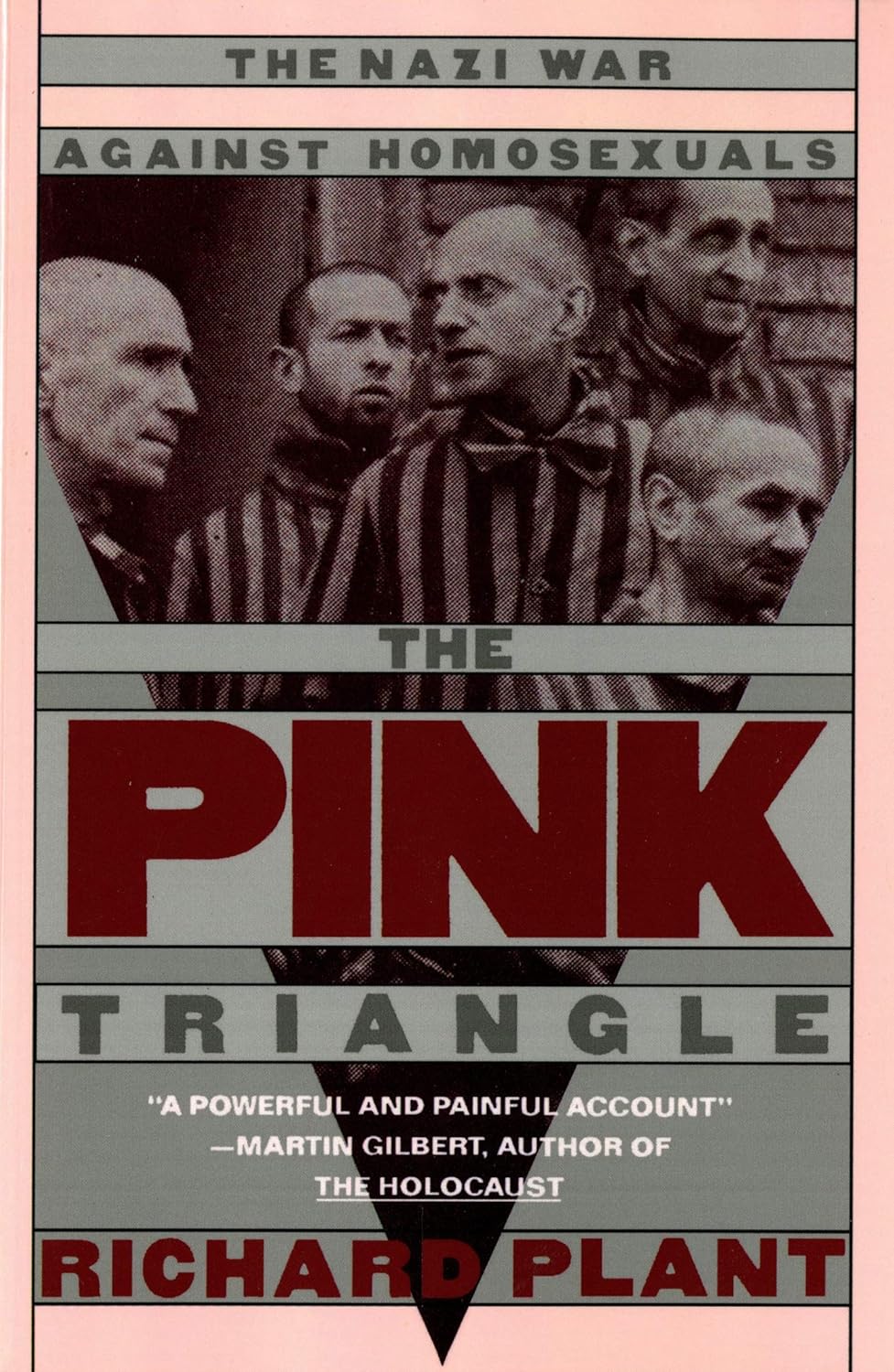
The Pink Triangle: The Nazi War Against Homosexuals
Documenting a Forgotten History
The Pink Triangle: The Nazi War Against Homosexuals by Richard Plant is a pioneering historical work that examines the systematic persecution of homosexual men and women under Nazi Germany. First published in 1986, the book helped bring broader public attention to a group of Holocaust victims whose experiences had often been overlooked in traditional historical accounts.
Combining historical research, government records, survivor testimonies, and personal analysis, Plant documents how Nazi policies targeted individuals based on their sexual orientation and how these actions affected countless lives. As both a historian and a refugee who fled Nazi Germany, Plant brought a unique perspective to his research, helping preserve stories that might otherwise have been lost.
The book remains an important resource for understanding the full scope of Nazi persecution and the lasting impact of discrimination on LGBTQ+ communities.
The Nazi Campaign Against Homosexuality
Under Adolf Hitler’s regime, authorities intensified enforcement of Paragraph 175, the German law criminalizing sexual relationships between men. Thousands of individuals were arrested, investigated, imprisoned, and subjected to state-sponsored persecution.
Plant details how homosexual men were identified, monitored, and often deported to concentration camps, where they were forced to wear the pink triangle as a mark of their classification. The book also examines the broader social climate that enabled discrimination and explores how Nazi ideology sought to suppress identities deemed incompatible with its vision of society.
Beyond the concentration camps, many individuals lost their jobs, families, reputations, and personal freedoms as a result of anti-homosexual policies. Plant’s research demonstrates how persecution extended far beyond imprisonment and affected nearly every aspect of daily life.
Preserving Memory and Expanding Holocaust Understanding
One of the book’s most important contributions is its effort to ensure that LGBTQ+ victims are included in Holocaust remembrance. For many years after World War II, homosexual survivors received little recognition and were often excluded from compensation programs and public memorials.
Plant examines the challenges faced by survivors after the war and explores how historical memory evolved over time. By documenting these experiences, he helped expand public understanding of the Holocaust and encouraged scholars, educators, and advocates to recognize the diversity of communities targeted by the Nazi regime.
The book also traces the transformation of the pink triangle from a symbol of persecution into a symbol of remembrance, resilience, and LGBTQ+ activism.
Why This Book Matters Today
At Evergreen Caregiver Support, we believe that understanding history helps create more informed, compassionate, and inclusive communities. The Pink Triangle provides valuable insight into the consequences of prejudice, discrimination, and the abuse of state power while highlighting the importance of protecting human rights.
For caregivers, educators, and helping professionals, the book offers opportunities to discuss historical memory, social justice, resilience, and the importance of recognizing marginalized voices. It also serves as a reminder that preserving history is essential to preventing future discrimination and ensuring that all victims of persecution are remembered.
As conversations about diversity, inclusion, and human rights continue today, works like The Pink Triangle help provide important historical context and reinforce the value of dignity and equality for all people.
Book Information
- Title: The Pink Triangle: The Nazi War Against Homosexuals
- Author: Richard Plant
- Genre: Holocaust History / LGBTQ+ History
- Topics: Holocaust Studies, LGBTQ+ History, Human Rights, Historical Memory, Social Justice, Nazi Germany
- Focus: The persecution of homosexual individuals under Nazi rule and the lasting impact of those policies on LGBTQ+ communities
- Format: Historical Nonfiction
If you would like to learn more about this book or add it to your own library, Click Here
Share the Post: