Keith Haring, HIV, and Power of Visibility
The significance of Keith Haring discussing his HIV status in the August 10, 1989 issue of Rolling Stone goes far beyond the disclosure itself. It was a deeply personal act, but it was also a cultural and political statement at a time when HIV/AIDS was surrounded by fear, misinformation, homophobia, and silence.
The interview is especially powerful because Haring did not present his HIV status as something shameful or as a confession. Instead, he placed it within the larger story of his life, his sexuality, his art, and the community he belonged to. In the interview, Haring explained that he had known he was HIV-positive before becoming ill and that he had practiced safer sex for years. He also made clear that he had no regrets about his life or his sexuality. (Haring)
Cultural significance
In 1989, publicly acknowledging that you were living with HIV was an extraordinarily courageous act—particularly for someone as visible as Haring. HIV/AIDS had become heavily associated in the public imagination with gay men, death, drug use, and moral judgment. Haring recognized that this association was doing tremendous damage to young people who were trying to understand their own sexuality.
One of the most significant aspects of the interview is Haring’s concern for young gay people growing up during the AIDS crisis. He understood that HIV/AIDS could transform sexuality itself from something that could be explored and understood into something young people might associate with shame, fear, and death. He worried about what that meant for a young person who was beginning to realize they were gay and who had few openly gay role models. (Haring)
That makes his disclosure particularly important: Haring was becoming the role model he wished young people had.
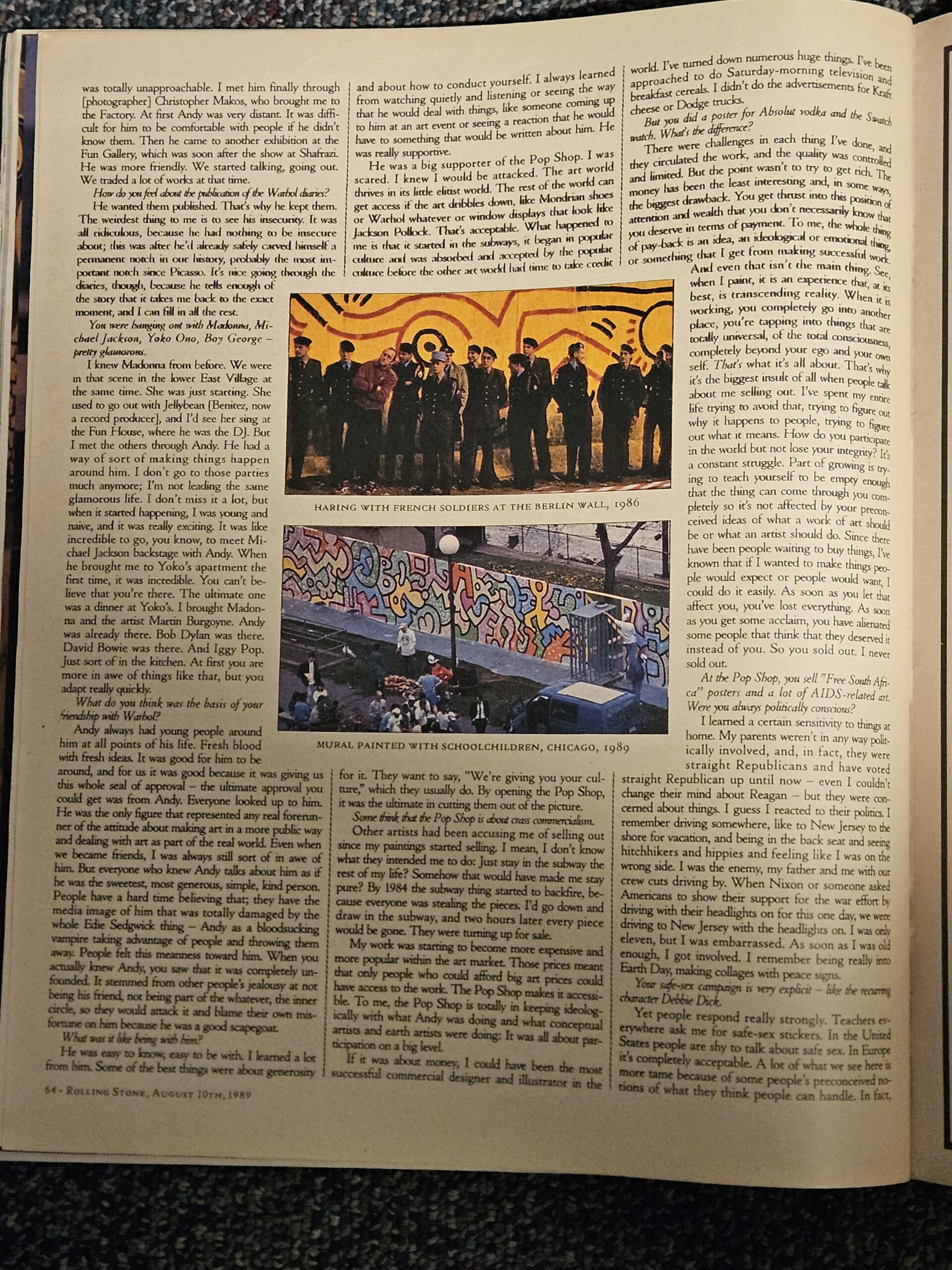
His openness also challenged the idea that HIV-positive people should disappear from public life. Haring continued working with children, creating public art, advocating for HIV/AIDS awareness, and participating in activism. His diagnosis did not make him retreat from the world. Instead, he became even more visible. PBS notes that his 1989 Rolling Stone interview challenged the silence and stigma surrounding HIV/AIDS at a time when very few prominent people were willing to speak openly about living with the disease. (PBS)
Personal significance
For Haring, the disclosure was also about refusing to allow illness to rewrite the meaning of his life.
Perhaps the most striking element of the interview is his refusal to frame his sexuality or his past as mistakes that had led to HIV. He essentially rejected the idea that becoming sick meant he needed to apologize for who he had been. He described his life as something he had lived openly and naturally and said he would not go back and change it. (Haring)
That distinction is incredibly important when looking back at the AIDS crisis. People living with HIV were frequently subjected to the assumption that their illness was evidence of irresponsible behavior or moral failure. Haring challenged that narrative simply by saying, in effect: I lived my life, I loved people, I made choices, and I do not regret being myself.
There was also an urgency to his disclosure. Haring knew that he was sick and that his time might be limited. Rather than allowing the diagnosis to silence him, he used his remaining time to increase his artistic and social impact. His work increasingly confronted AIDS, sexuality, death, and discrimination. His art and activism became intertwined with his awareness that there was not unlimited time left. (PBS)
Why the Rolling Stone interview matters today
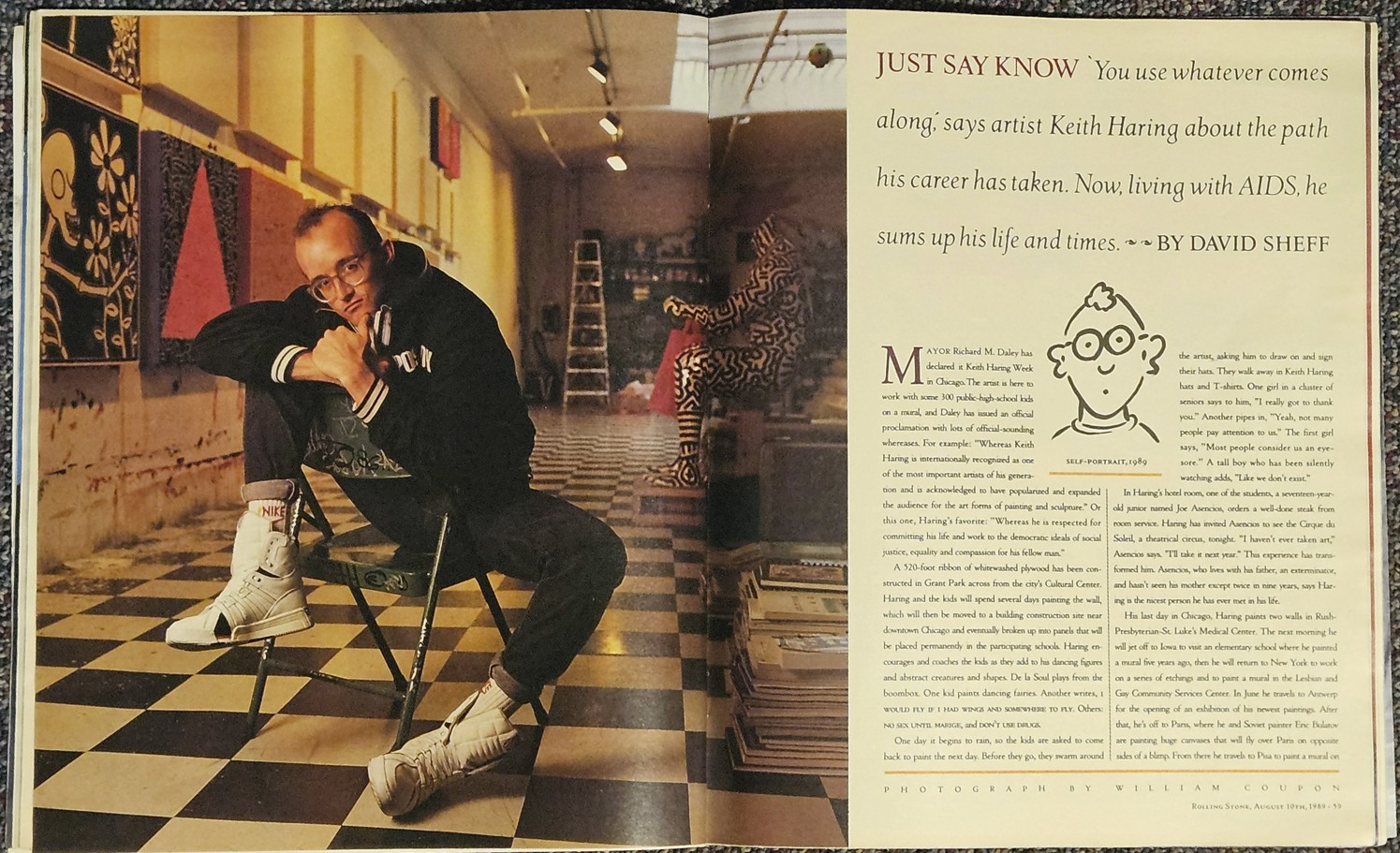
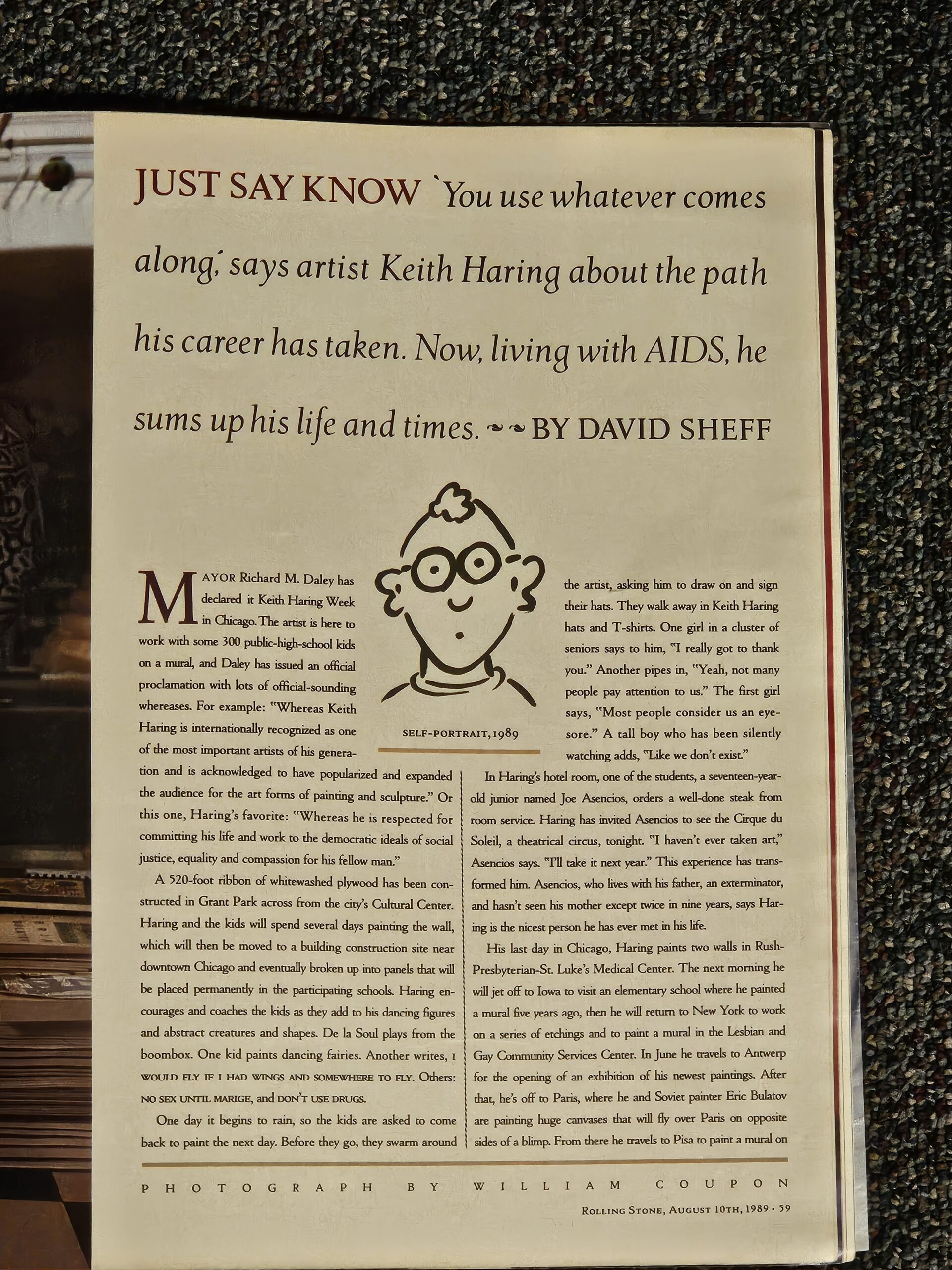
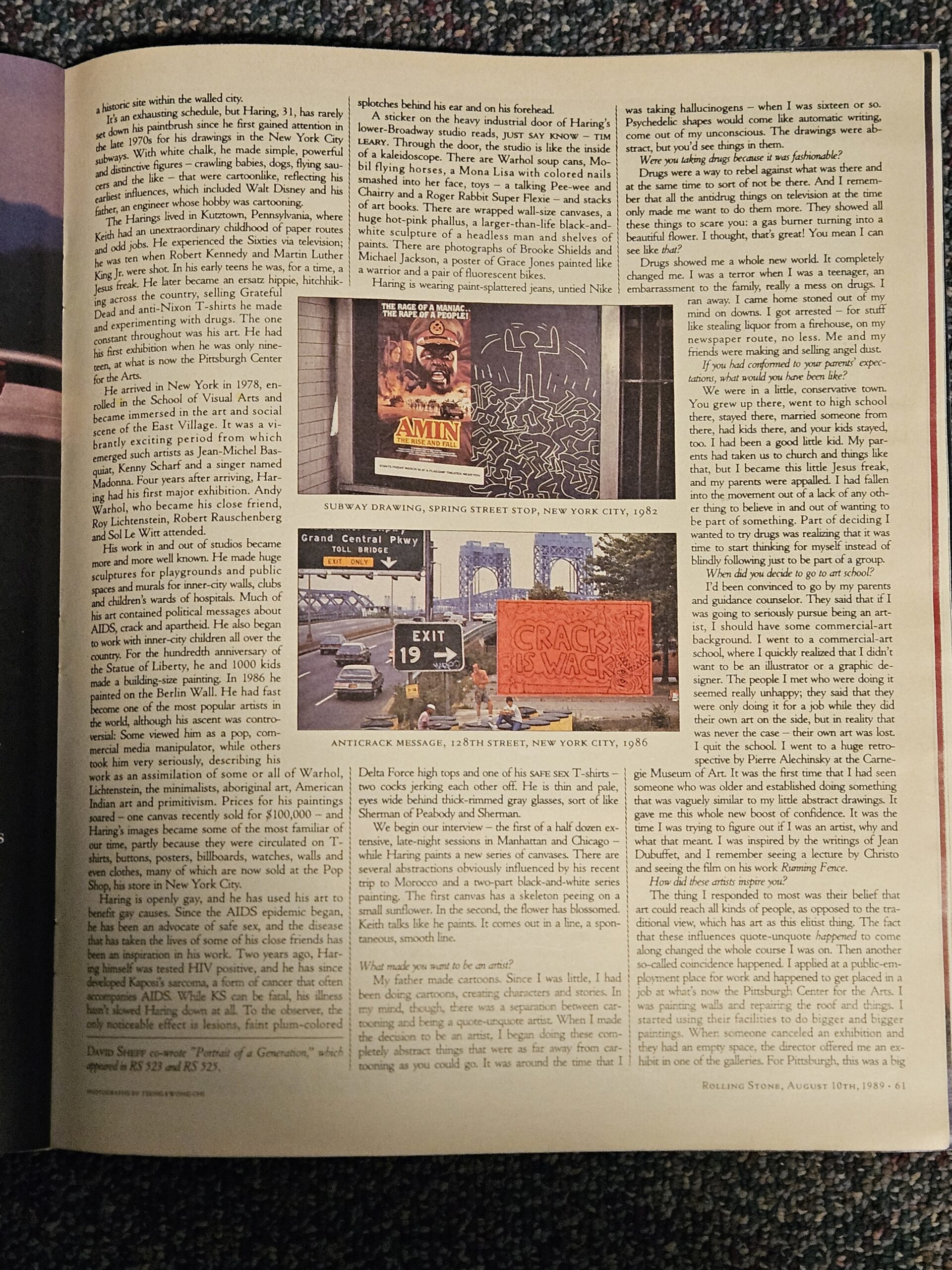
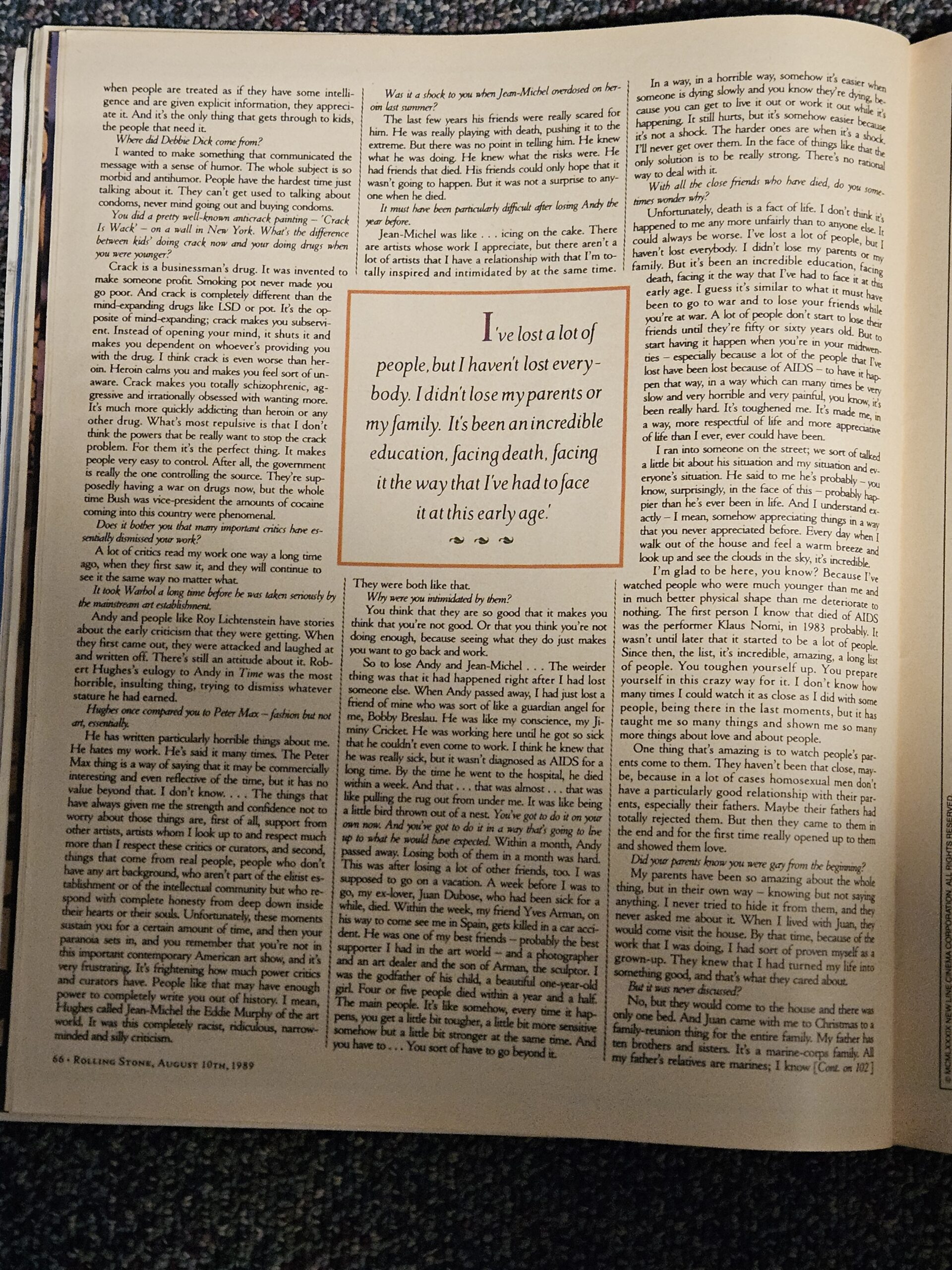
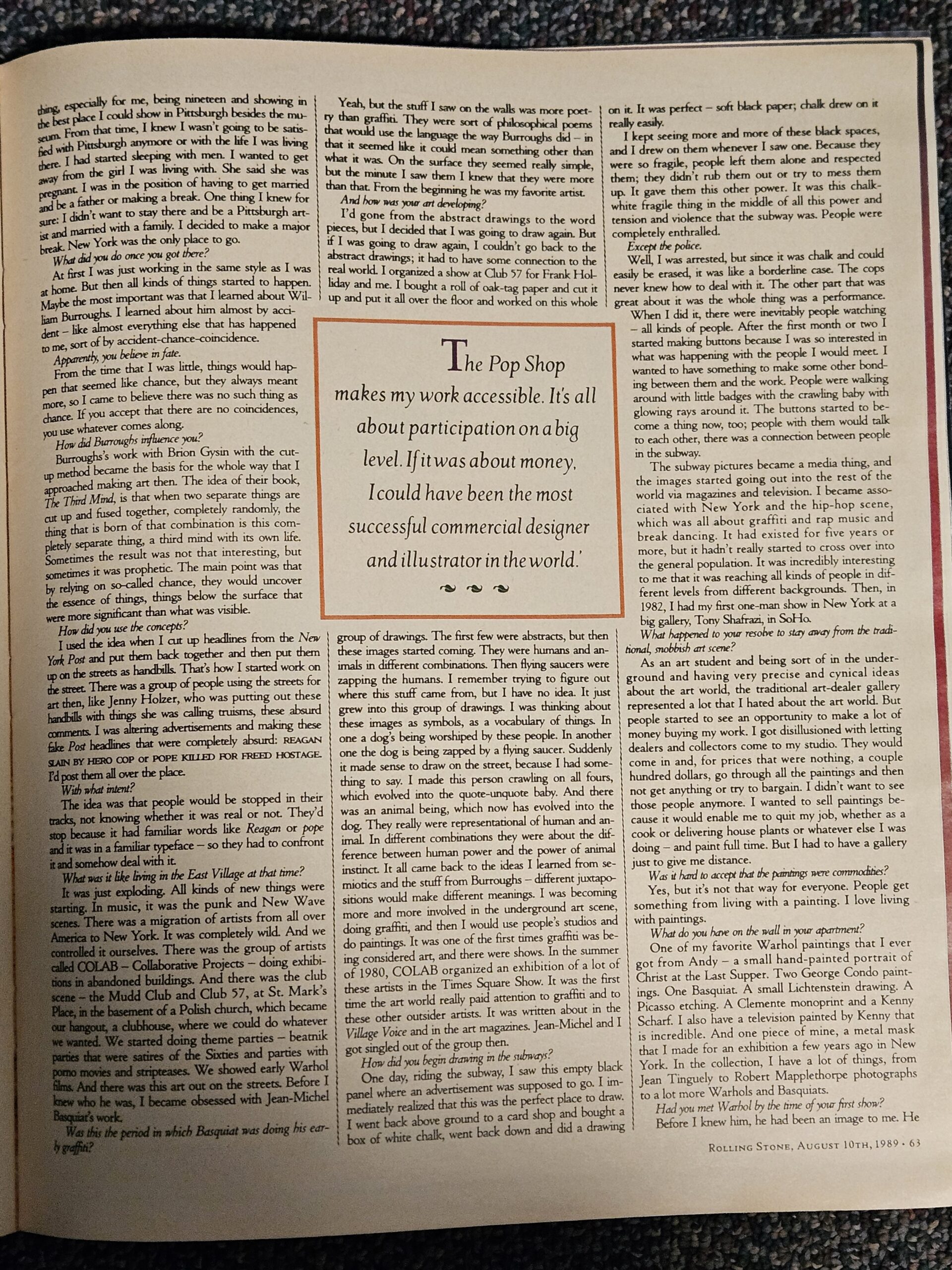
The August 1989 Rolling Stone, No. 558, interview—“Keith Haring: An Intimate Conversation,” by David Sheff—is historically significant because it captures Haring at a moment when he was simultaneously at the height of his cultural influence and confronting a life-threatening illness. The issue was published August 10, 1989, only months before Haring’s death on February 16, 1990. (Haring)
What makes the interview so powerful is that Haring refused to separate the artist, the gay man, the activist, and the person living with HIV. They were all parts of the same person. His disclosure therefore became an act of visibility.
At a time when silence could protect stigma, Haring chose to speak. At a time when AIDS was being used to stigmatize gay men, he publicly identified himself as a gay man living with HIV. And at a time when many people with AIDS were being reduced to their illness, Haring insisted on continuing to be an artist, friend, activist, mentor, and human being.
That is perhaps the deepest cultural significance of the article: Haring did not disclose HIV simply to tell the world that he was dying. He disclosed it to remind the world that he was still living.
And that distinction is central to understanding both Haring’s legacy and the cultural history of the AIDS crisis.
Share the Post:

Explore the Collection